Address
Bldg-1, No.19, Yunpu 1st Road, Huangpu District, Guangzhou, Guangdong, China, 510530
Work Hours
Monday to Friday: 8:30AM - 5:30PM
Address
Bldg-1, No.19, Yunpu 1st Road, Huangpu District, Guangzhou, Guangdong, China, 510530
Work Hours
Monday to Friday: 8:30AM - 5:30PM

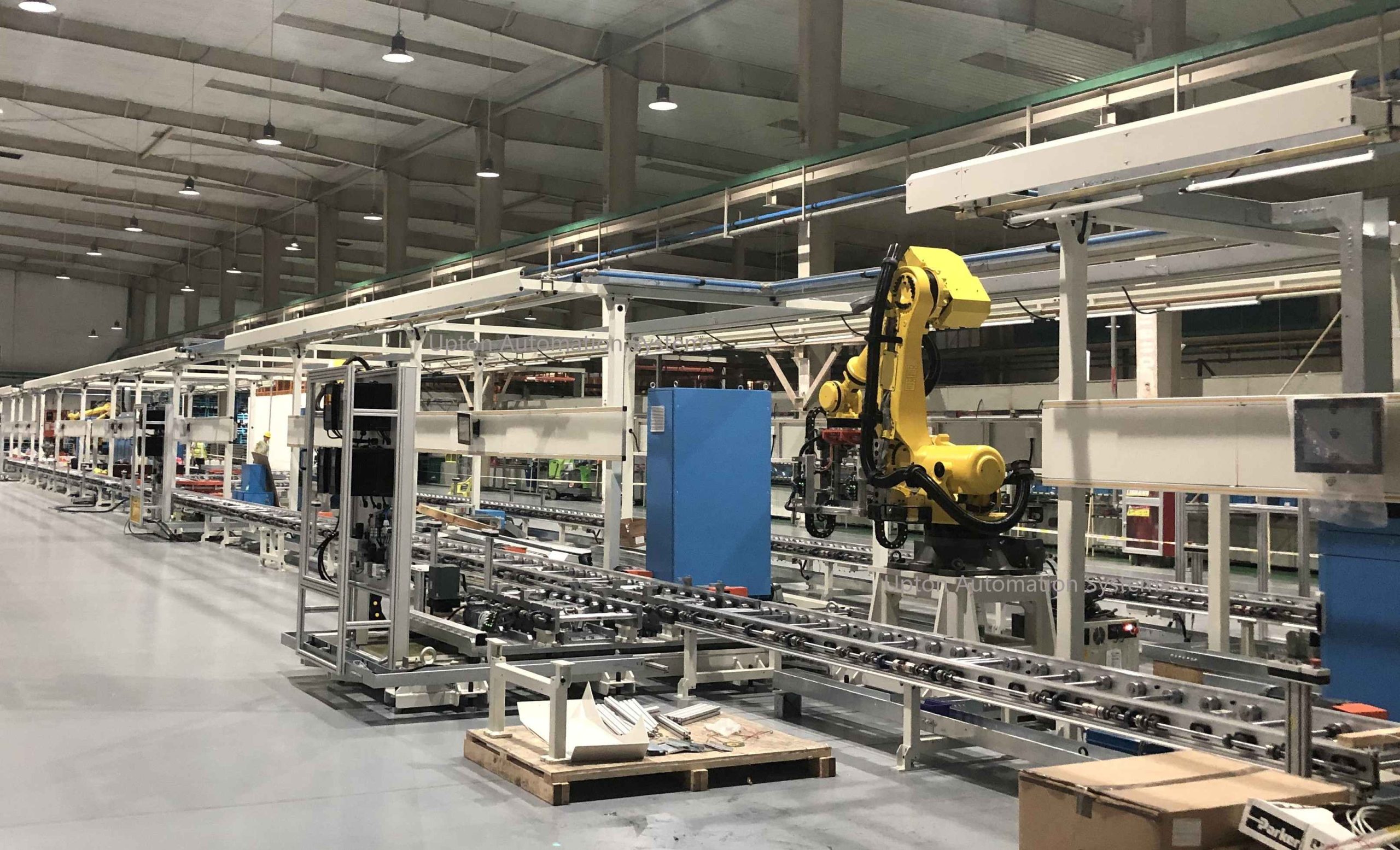
Are you facing bottlenecks in your EV battery manufacturing process? Scaling up production efficiently requires absolute precision at every level of the vehicle’s power architecture. When we engineer an EV battery assembly line, we build the system around three highly controlled stages: the cell, the module, and the final pack.
The cell is the core electrochemical unit. Handling these units requires exact automation to prevent mechanical stress or material contamination.
Individual cells are grouped together to create manageable, protected power blocks.
This is the final, heavy-duty stage where the power unit is prepared for the vehicle chassis. While we frequently support manufacturers transitioning to direct cell to pack technology, the standard pack integration process involves:
Building a reliable power source requires a tightly controlled EV battery manufacturing process. We engineer our production lines to move efficiently through four precise stages, ensuring every unit meets the highest global standards.
Before any physical assembly begins, we inspect every individual unit. Through rigorous EV battery quality control, we test each cell for proper voltage and internal resistance. Grouping perfectly matched cells ensures the long-term health and stability of the final battery pack.
Physical accuracy during battery module assembly is non-negotiable. We deploy automated battery manufacturing robotics to carefully handle, stack, and align the components. This automated handling easily adapts to exact specifications, whether we are working with prismatic and cylindrical cells or pouch formats.
To guarantee flawless power delivery, we securely connect the busbars across the cell groups. We execute high-precision laser welding battery cells and ultrasonic joining techniques. This creates robust, low-resistance electrical connections designed to withstand heavy road vibrations over years of driving.
In the final step, we utilize heavy-duty battery pack assembly equipment to place the completed modules into their secure structural enclosure. This phase is critical for Battery Management System (BMS) integration, which acts as the brain of the unit. We finish by completing the wiring harness and thermal management installation to keep the entire system operating at safe temperatures.
In our EV battery assembly line, relying on manual processes simply doesn’t cut it. We build automated systems that do the heavy lifting to keep lithium-ion battery production moving efficiently and safely. Automation is the engine that drives modern production, ensuring we hit aggressive output goals with absolute precision.
Safety dictates every decision we make on the EV battery assembly line. If a battery isn’t secure, nothing else matters. That is why we embed uncompromising testing protocols directly into the production flow to prevent thermal runaway and degradation before they ever have a chance to start.
Before any unit leaves our facility, we run mandatory, strict end-of-line checks. We verify every electrical connection, test insulation limits under high voltage stress, and confirm complete Battery Management System (BMS) integration. There is no room for guesswork.
Even microscopic leaks can lead to catastrophic safety hazards. We eliminate this risk by integrating multi-layered leak detection stations right into the manufacturing process:
By hardwiring these testing standards into our automated equipment, we guarantee that every single pack leaving our floor meets the strictest global safety benchmarks.
Building a reliable EV battery assembly line requires a partner who understands the fast-paced demands of the global market. You need more than just standard battery pack assembly equipment; you need a system built for speed, safety, and scale. We focus on delivering exactly that.
We know that getting your production up and running smoothly is the top priority. Here is what we bring to your facility:
