Address
Bldg-1, No.19, Yunpu 1st Road, Huangpu District, Guangzhou, Guangdong, China, 510530
Work Hours
Monday to Friday: 8:30AM - 5:30PM
Address
Bldg-1, No.19, Yunpu 1st Road, Huangpu District, Guangzhou, Guangdong, China, 510530
Work Hours
Monday to Friday: 8:30AM - 5:30PM

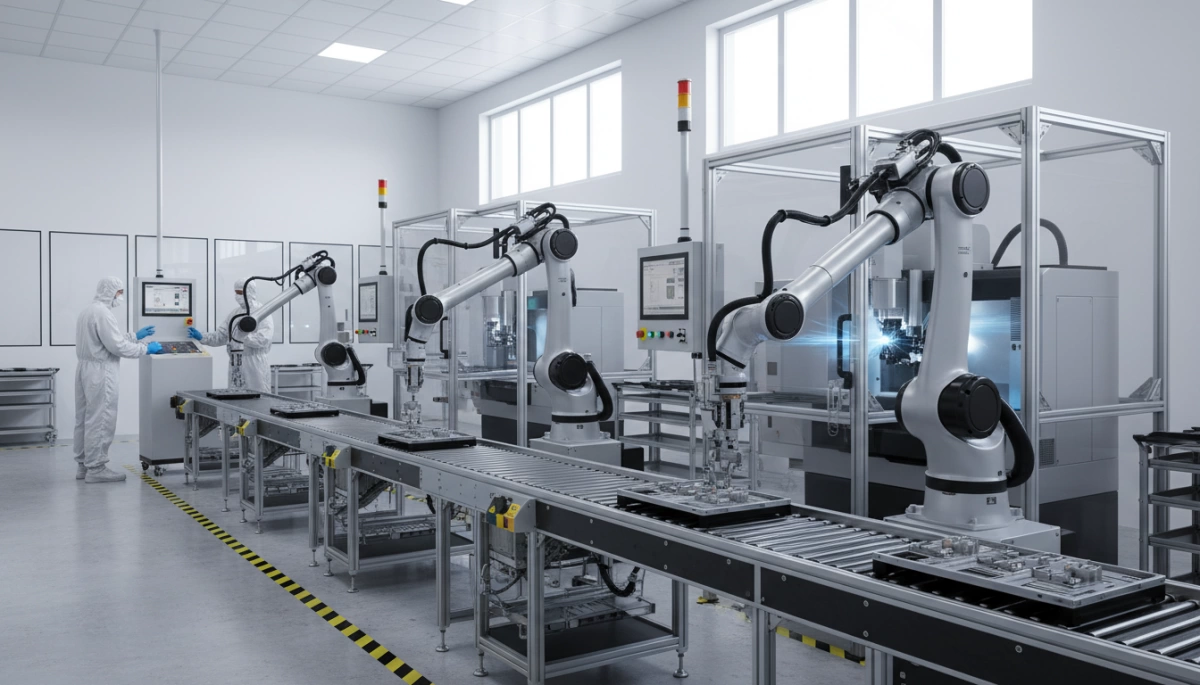
Are your production lines struggling to hit throughput targets without compromising quality? For plant managers and process engineers, the surging global demand for EV batteries and energy storage systems (ESS) has turned scaling from a future goal into an immediate, high-stakes mandate.
Relying on manual and semi-automated processes is a massive liability. We routinely see legacy manufacturing facilities hitting their breaking points due to compounding operational friction:
When you operate a high-volume EV battery assembly line, these bottlenecks do more than crush your margins—they introduce the severe risk of catastrophic field failures.
At Upton, we leverage decades of engineering pedigree to solve these exact pain points. We know that surviving the EV and ESS boom requires completely eliminating process variability. The definitive pathway to high-volume, defect-free mass production is cell assembly automation.
By transitioning to fully automated, turnkey lithium-ion battery production equipment, we engineer strict predictability right onto your facility floor. It is the single most effective way to scale throughput safely, ensuring every unit meets rigorous tolerances while actively driving down your cost per kilowatt-hour.
When we build an EV battery assembly line, breaking down the complex workflow into highly automated phases is non-negotiable. Upgrading your lithium-ion battery production equipment requires absolute precision at every step. Here is how we structure a fully automated line from start to finish.
Before building the cell, we must handle the raw components flawlessly.
This is where the physical battery takes shape.
Solid internal connections dictate battery lifespan and overall safety.
The final assembly phase happens in a strictly controlled environment to protect the cell’s integrity.
In cell assembly automation, integrated testing is not an option; it is a strict requirement. I know firsthand that battery failures in the field carry severe safety liabilities and massive financial consequences. To build a reliable EV battery assembly line, we must embed uncompromising quality checks directly into the production workflow. This proactive approach is the absolute backbone of our battery defect reduction strategies.
Before a single drop of liquid enters the casing, we have to prove the cell structure is flawless. We use inline integration to spot micro-fractures that are completely invisible to the naked eye.
Once the cells are filled and sealed, guaranteeing zero leakage is our final non-negotiable safety checkpoint. We run every unit through an advanced electrolyte leak detection system to ensure those hermetic seals hold perfectly under real-world pressure.
| Testing Phase | Process Timing | Primary Objective |
|---|---|---|
| Air & Helium Leak | Pre-filling | Identify micro-fractures and verify structural integrity |
| Electrolyte Leak | Post-filling | Verify hermetic seals and guarantee zero liquid leakage |
If a cell fails any of these automated checks, it is instantly pulled from the battery module assembly process. Relying on this tier of automated testing technology is exactly how we deliver safe, defect-free power solutions to the global market.
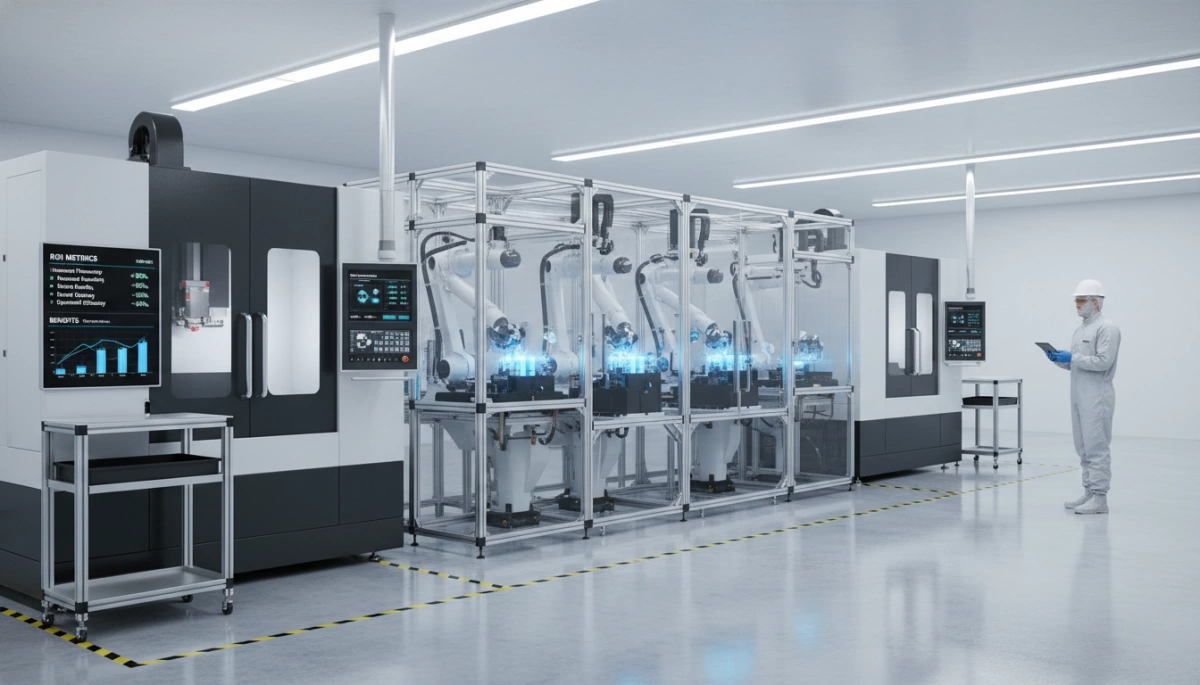
Plant managers globally are overhauling their production facilities. When we deploy complete cell assembly automation for an EV battery assembly line, the return on investment is immediate, clear, and measurable.
Here is a breakdown of the primary metrics driving these facility upgrades:
| ROI Metric | Impact on Production |
|---|---|
| Throughput & Speed | Achieves exponential increases in cells per minute (CPM), eliminating traditional manufacturing bottlenecks. |
| Defect Reduction | Uses real-time data traceability to drive defect rates below 0.1%, securing product reliability. |
| Labor Reallocation | Shifts focus to smart factory integration, upskilling workers from manual tasks to managing the automated ecosystem. |
| Lower Price Points | Leverages Design for Manufacturing (DFM) automation to drastically reduce the overall cost per kilowatt-hour. |
By prioritizing high-speed throughput and implementing aggressive battery defect reduction strategies, we ensure your manufacturing lines remain scalable, highly competitive, and profitable in the global market.
When I scale an EV battery assembly line, the integration partner makes or breaks the project. You aren’t just buying machinery; you are building a high-speed ecosystem. Here is exactly what I demand from a reliable integrator.
What is cell assembly automation and why is it essential for scaling EV production?
Cell assembly automation replaces slow manual labor with high-speed robotics and smart factory integration. We rely on it because manual lines simply cannot keep up with the surging global EV demand. To scale an EV battery assembly line effectively, you need turnkey automation solutions to guarantee:
How do automated leak detection systems prevent battery failure?
A battery failure in the field is a massive liability. We integrate automated testing technology directly into the production flow to catch microscopic flaws before they become dangerous.
What are the primary ROI metrics when upgrading to a fully automated battery assembly line?
When we upgrade facilities to end-to-end manufacturing lines, the return on investment is clear, immediate, and measurable. Deploying strict battery defect reduction strategies through automation delivers on three main metrics:
| ROI Metric | Impact of Automation |
|---|---|
| Speed (CPM) | Massive increase in cells produced per minute. |
| Defect Rate | Plummets well below 0.1% via data-driven quality control. |
| Labor Shift | Reallocates the workforce from repetitive physical tasks to high-value system management. |
