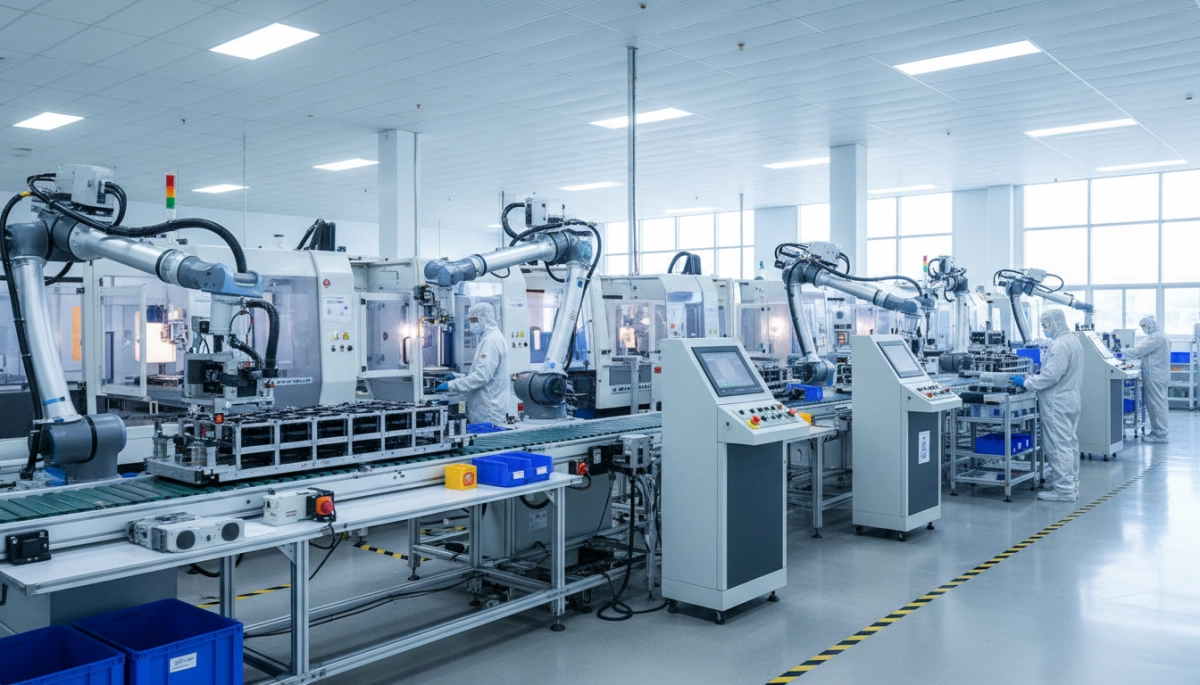
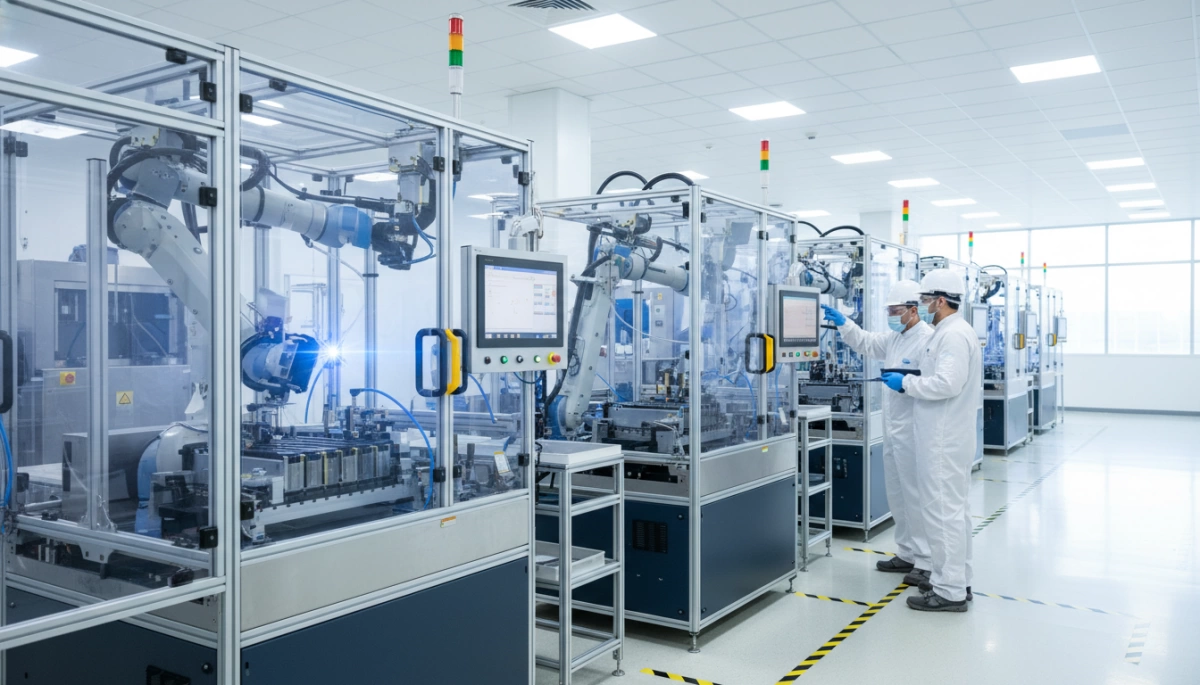
Are inconsistent material dispersions or uneven coating thicknesses causing yield drops early in your run? The front-end phase of your lithium-ion battery production line sets the baseline for the quality, energy density, and structural integrity of the final cell. When procuring battery manufacturing equipment, investing heavily in front-end precision is the only way to eliminate downstream bottlenecks and avoid costly scrap.
As an experienced industry partner, we engineer our front-end processing machinery to hit exact specifications at scale. Here is how we tackle the critical stages of electrode fabrication:
Battery Slurry Mixing Equipment
A perfectly homogenous slurry is non-negotiable for high-performance cells.
Core Technology: Vacuum planetary mixers and continuous twin-screw extruders.
The Objective: Achieve uniform dispersion of active materials, binders, and conductive agents under a strict vacuum environment.
The Result: Elimination of agglomerates and a highly stable viscosity, preparing the batch for flawless downstream coating.
Electrode Coating Machine
Precision application directly dictates the electrical capacity and safety limits of your batteries.
Core Technology: High-precision slot-die coaters.
The Objective: Apply exact, uniform thicknesses of wet slurry onto moving current collector foils (copper for anodes, aluminum for cathodes).
The Result: Consistent, edge-to-edge loading profiles that maximize active material utilization without exceeding physical tolerances.
Roll-to-Roll Drying Ovens
Rapid, highly controlled drying prevents detrimental binder migration to the surface.
The Objective: Slice wide electrode master rolls into the specific, narrower widths required for middle-end cell assembly.
The Result: Perfectly straight, burr-free edges that ensure seamless tracking during the winding or stacking phases.
Phase 2: Cell Assembly with Reliable Battery Manufacturing Equipment
Once the electrodes are prepped, we move straight into the middle-end process: assembling the actual cells. Depending on your production goals, our turnkey battery assembly solutions cover every major battery format with absolute precision.
Cylindrical Battery Manufacturing
For standard formats like the 18650 or 21700, you need high-speed consistency to keep up with high-volume demands.
Winding machines: Tightly and evenly rolls the electrode materials.
Automated grooving & casing insertion: Drops the wound roll safely into its protective cylindrical can.
Laser welding: Delivers fast, exact welds for the battery tabs to secure the connection.
Prismatic Cell Assembly Line
When we build large-scale EV power packs, prismatic cells offer the rugged durability required for the job.
Z-folding and stacking machines: Precisely layers the electrodes to maximize internal space.
Ultrasonic welding: Powers through thick, heavy-duty tabs for a guaranteed solid connection.
Rigid housing insertion: Slides the assembled core cleanly into an aluminum or steel block.
Pouch Cell Packaging Equipment
Pouch cells give you maximum energy density in a lightweight, flexible footprint.
High-speed stacking: Keeps production lines moving fast without sacrificing alignment.
Precision tab welding: Secures delicate internal power connections.
Forming and sealing: Wraps the cell safely using specialized aluminum-plastic film.
Vacuum Electrolyte Filling Machine
This step makes or breaks the battery. You cannot afford to have air bubbles trapped inside the cell.
Vacuum injection systems: Pulls out the ambient air first, ensuring the highly sensitive electrolyte flows in flawlessly.
Precise dosing: Hits the exact required liquid volume every single time, completely eliminating air entrapment and preventing future failures.
Back-End Battery Manufacturing Equipment
Battery Formation and Aging
Formation and Aging Towers: This is where the cell actually becomes a working battery. We use large-scale automated testing racks to run the initial charge and discharge cycles. This step builds the vital Solid Electrolyte Interphase (SEI) layer. Reliable battery formation and aging equipment guarantees long-term cell performance and stability.
Quality Control and Inspection
Electrolyte Leak Detection System: Traditional leak testing fails when it comes to the strict demands of EV batteries. We rely on advanced helium and electrolyte leak detection technology. Catching micro-leaks early is the only way to prevent catastrophic field failures and ensure absolute safety.
Inline 3D X-Ray Systems: You can’t leave internal quality to chance. Our battery manufacturing equipment integrates 3D X-ray and optical inspections directly into the assembly line. We accurately measure electrode alignment and spot hidden internal anomalies long before the final packaging is sealed.
Key Considerations for Procuring Battery Manufacturing Equipment
When investing in battery manufacturing equipment, getting the hardware right from day one is non-negotiable. We know that choosing the right setup impacts everything from your production yield to your bottom line. Here is what you must evaluate before making a purchase.
Matching Your Production Scale
Your current and future capacity goals dictate your equipment needs. You cannot run a massive facility on lab-grade gear.
R&D Battery Lab Equipment: Perfect for coin cells and material testing. Prioritizes high precision and flexibility over speed.
Pilot Lines (MWh): The bridge between the lab and the factory floor. Used to validate manufacturing processes and produce test batches of cells.
Gigafactory Automation Systems (GWh): Built for relentless, 24/7 high-speed production. These systems rely heavily on robotics and inline quality control to churn out millions of cells.
Turnkey Solutions vs. Specialized Units
Should you buy an entire integrated line from one vendor, or hand-pick the best machines for each specific step?
Approach
The Pros
The Cons
Ideal For
Turnkey Battery Assembly Solutions
Seamless integration, single point of contact, faster setup and commissioning.
Can be less customizable; you are locked into one vendor’s ecosystem.
Rapid scaling and new Gigafactory build-outs.
Specialized “Best-in-Class” Units
Maximum performance for specific steps (e.g., buying a dedicated, high-end electrode coating machine).
Difficult integration; requires managing multiple vendors and software systems.
Upgrading specific bottlenecks in an existing lithium-ion battery production line.
Ensuring Chemistry Flexibility
The battery market evolves rapidly. While your current focus might be standard Lithium-ion chemistries like LFP or NMC, your factory shouldn’t become obsolete when new tech drops. We always recommend building flexibility into your line. Ensure your mixing, coating, and assembly equipment can be adapted or recalibrated for emerging chemistries like Solid-State or Sodium-ion. Future-proofing your hardware saves massive reinvestment costs down the road.
Why Choose Upton for Battery Manufacturing Equipment?
At Upton, we understand that scaling up production means you need a reliable partner, not just a vendor. We build battery manufacturing equipment designed for real-world demands. Here is exactly what we bring to the table:
Proven Expertise: We have over 20 years of experience delivering high-tech intelligent equipment to the global market. Whether you are scaling up pilot lines or deploying complete Gigafactory automation systems, we have the hands-on expertise to make it happen.
Precision & Quality: Production bottlenecks cost money. Our state-of-the-art turnkey battery assembly solutions are heavily engineered to eliminate those delays and guarantee absolute precision across your entire factory floor.
Comprehensive Testing Solutions: Quality control is not optional. We integrate advanced, zero-tolerance testing into our setups. This includes highly sensitive electrolyte leak detection systems built specifically for the rigorous demands of modern EV battery module assembly.
Speed & Support: Time to market matters. We deliver fast project turnarounds to get your lines running. Once you are live, our dedicated support team provides continuous service and optimization to ensure your production never stops.
FAQs About Battery Manufacturing Equipment
Critical Lithium-Ion Battery Production Line Gear
If you ask us to pinpoint the most critical piece of battery manufacturing equipment, we always point to the battery slurry mixing equipment and the electrode coating machine. If your slurry mix is inconsistent or the coating thickness is off by even a fraction of a micron, the entire batch is compromised. Precision at this stage dictates the energy density, safety, and overall lifespan of the final cell.
Timeline for Turnkey Battery Assembly Solutions
Deploying full-scale gigafactory automation systems is a massive undertaking. Generally, you should expect the setup and commissioning of a complete line to take anywhere from 12 to 18 months. This timeline includes equipment fabrication, factory floor installation, integration, and the critical trial runs needed to validate production before flipping the switch to commercial manufacturing.
Adapting for Solid-State Chemistries
Yes, much of the standard equipment can be adapted, but it requires strategic modifications. Core mechanical systems like electrode slitting and pouch or cylindrical casing carry over well. However, because solid-state batteries do not use liquid electrolytes, traditional vacuum filling stations are replaced. You will need to integrate specialized pressing machines capable of extreme pressures to ensure the solid electrolyte bonds perfectly with the electrodes.
Avoiding Electrode Manufacturing Bottlenecks
The drying and pressing phases are notorious for slowing down the entire operation. Here is how we recommend clearing those bottlenecks:
Invest in high-speed drying: Standard ovens can’t keep up. Upgrade to multi-zone, continuous drying systems that match the pace of your coating machines.
Optimize slurry ratios: A higher solid-to-liquid ratio during the mixing phase means there is less solvent to evaporate later, drastically cutting drying time.
Automate material transfers: Keep your master rolls moving seamlessly between the coater and the roll-to-roll calendering machines to eliminate manual handling delays.