Address
Bldg-1, No.19, Yunpu 1st Road, Huangpu District, Guangzhou, Guangdong, China, 510530
Work Hours
Monday to Friday: 8:30AM - 5:30PM
Address
Bldg-1, No.19, Yunpu 1st Road, Huangpu District, Guangzhou, Guangdong, China, 510530
Work Hours
Monday to Friday: 8:30AM - 5:30PM

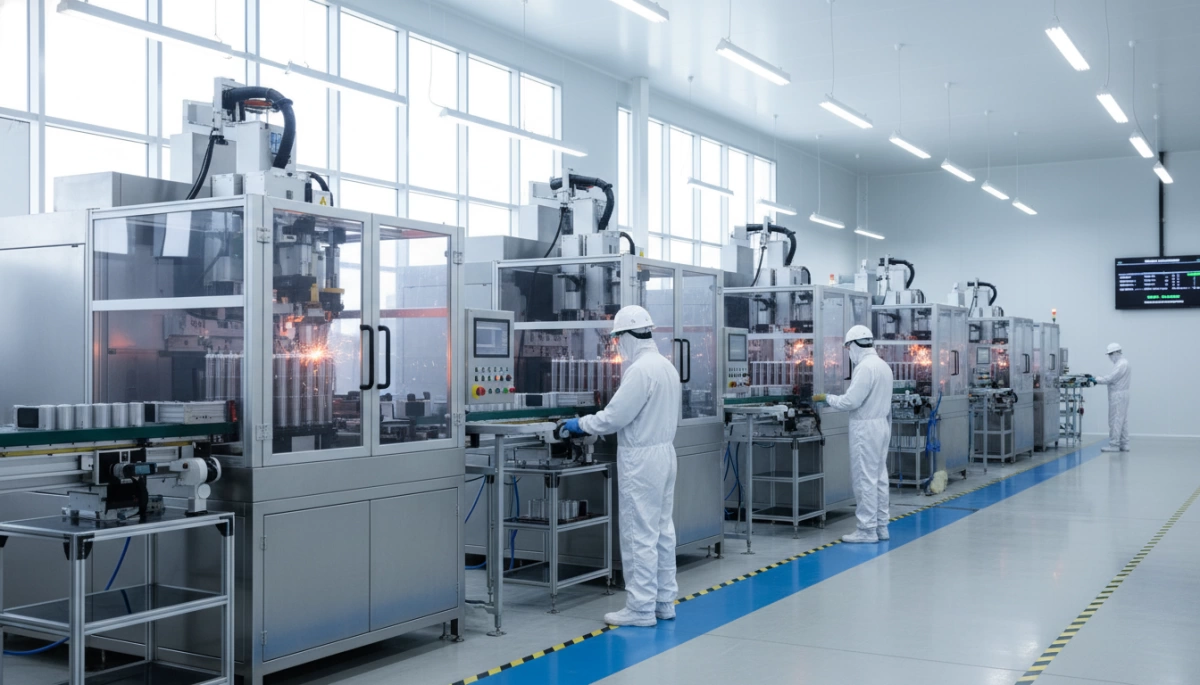
Are you struggling to scale your EV battery production from a pilot line to full gigafactory output without compromising your yield?
Selecting the right battery manufacturing equipment is the single most critical decision you will make to eliminate raw material waste and guarantee long-term safety.
As engineers and automation experts with decades of intelligent design experience, we know that investing in high-precision, turnkey battery production lines is the only way to meet today’s zero-tolerance industry standards.
In this guide, you’re going to learn exactly how to optimize your lithium-ion battery production process, from the initial electrode preparation to implementing advanced electrolyte leak test systems.
Whether you are looking to streamline a battery module manufacturing setup, upgrade your EV battery assembly line, or integrate more reliable automated battery testing equipment, this breakdown gives you the exact framework you need to scale with confidence.
Let’s dive right in.
Scaling a lithium-ion battery production process from a pilot run to full gigafactory output keeps most engineers up at night. How do you push massive throughput while maintaining micro-level tolerances? I have found that surviving this transition requires locking down your battery manufacturing equipment at every single phase. Variances early on cascade into catastrophic failures later. Let’s break down the essential phases of production.
This is your foundation. If you get the chemistry and physical properties wrong here, no downstream automation can save the product. We rely on high-precision equipment to handle these upstream processes:
This is the core operation where coated foils actually become a functional battery. The equipment architecture shifts drastically depending on your chosen form factor:
Individual cells are essentially useless until they are combined into usable power units. Moving from raw cells to a finished module requires a highly synchronized EV battery assembly line.
When we scale operations from small pilot lines to massive gigafactory automation solutions, manual processes simply cannot keep up. To drive high-volume output without ever compromising on quality, investing in heavily automated battery manufacturing equipment is an absolute necessity. It is the only way we can guarantee consistent, safe, and reliable production runs at a global scale.
To maximize throughput and eliminate bottlenecks, a reliable turnkey battery production line must integrate several core technologies seamlessly.
Here is what drives our automated systems:
By building our battery assembly automation around these specific operations, we ensure that every single unit rolling off the floor meets the absolute highest performance and safety standards.
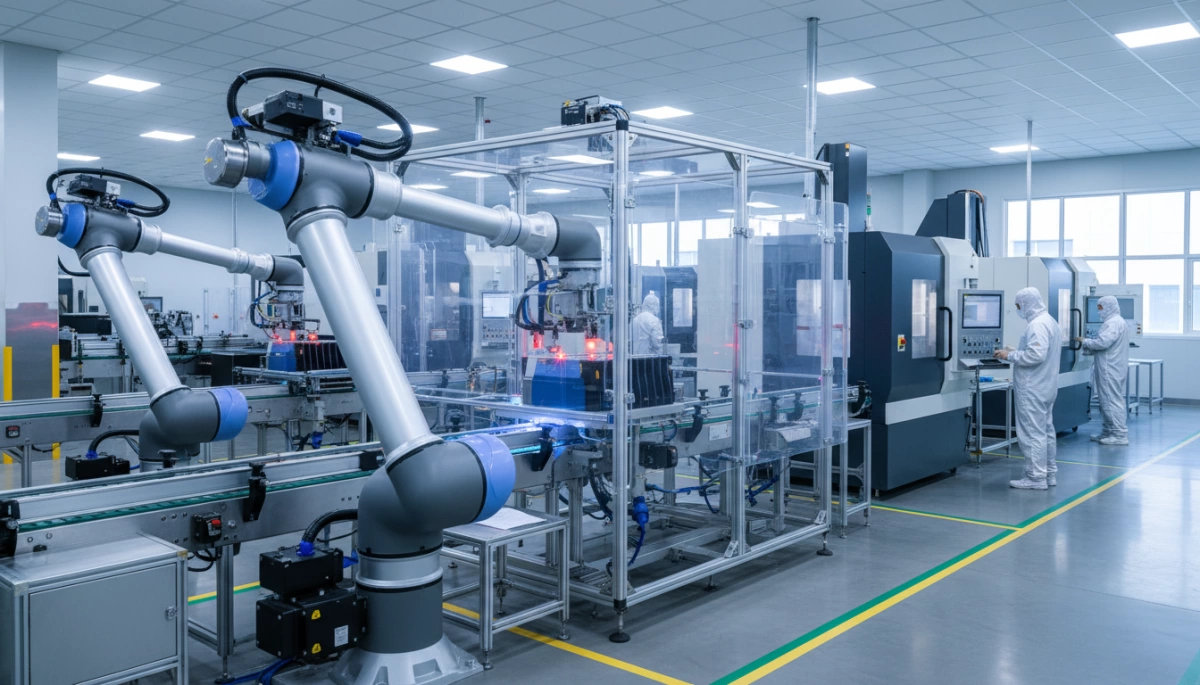
Let’s be real: in the EV industry, a single failed cell can damage a brand beyond repair. When we look at electrolyte leakage, we aren’t just dealing with a minor manufacturing defect. We are looking at catastrophic safety risks, potential thermal runaway, and total pack failure. The right battery manufacturing equipment must catch these flaws long before a unit ever leaves the factory floor.
To guarantee absolute safety, our automated battery testing equipment relies on multiple, highly precise layers of defense to ensure structural integrity:
Physical assembly is only half the battle. A battery isn’t truly functional until its internal chemistry is properly activated and stabilized.
Using top-tier cell formation and aging equipment is the only way to ensure that the finished product moving through your battery pack testing systems will actually deliver on its promised lifespan, capacity, and safety metrics.
Are you investing in a complete turnkey battery production line or just buying piecemeal machines? Managing multiple vendors creates integration nightmares and workflow bottlenecks. You need a partner capable of delivering comprehensive Gigafactory automation solutions to keep your entire process moving seamlessly from start to finish.
There is absolutely no room for guesswork in high-precision battery manufacturing. We know that partnering with vendors who bring decades of intelligent equipment design to the table is the best way to eliminate risk. You need experts who have already mastered battery assembly automation and can anticipate production hurdles before they hit your factory floor.
In this industry, delays cost millions. Fast commissioning and proactive service are critical to keeping your production timelines strictly on track. A reliable equipment provider takes full ownership of project management, getting your machinery installed, tested, and online without excuses.
The energy sector shifts rapidly. Your core battery manufacturing equipment must be flexible enough to scale right alongside evolving battery chemistries and new form factors. If your machinery is locked into producing just one specific cell type, you will quickly fall behind. Choose adaptable systems built to handle future market demands.
