Address
Bldg-1, No.19, Yunpu 1st Road, Huangpu District, Guangzhou, Guangdong, China, 510530
Work Hours
Monday to Friday: 8:30AM - 5:30PM
Address
Bldg-1, No.19, Yunpu 1st Road, Huangpu District, Guangzhou, Guangdong, China, 510530
Work Hours
Monday to Friday: 8:30AM - 5:30PM

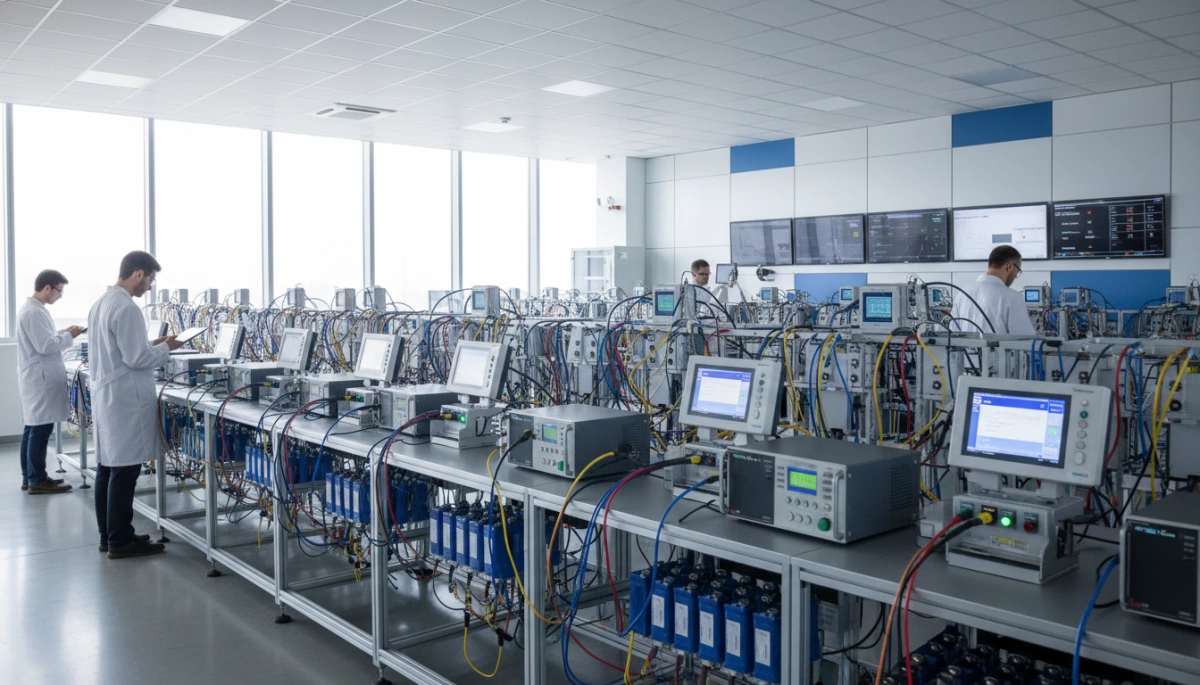
Are your newly manufactured lithium cells degrading faster than expected? The lifespan and reliability of high-voltage EV battery systems are dictated by what happens right after assembly. Let’s break down the most critical phase in the lithium battery manufacturing process.
We view the battery cell formation process as the true birthplace of a battery’s performance. Formation consists of the highly controlled initial charge and discharge cycles applied to a raw cell. Using a precision charge and discharge tester, we carefully activate the internal electrochemical materials. This isn’t just about pushing power into a cell; it is a delicate conditioning step that dictates the future reliability of the entire battery pack.
The primary objective of these critical first cycles is the creation of the Solid Electrolyte Interphase (SEI). As the first charge is applied, a chemical passivation layer forms on the graphite anode. Developing a robust SEI layer is absolutely non-negotiable for cell survival.
Proper battery forming and testing requires a massive commitment of operational resources. Because it cannot be rushed without destroying cell chemistry, this phase acts as the primary bottleneck in manufacturing facilities.
| Formation Metric | Manufacturing Impact |
|---|---|
| Process Duration | Can span from several days to weeks depending on the specific cell chemistry and size. |
| Power Consumption | Extremely energy-intensive, requiring massive grid draws to execute precision cycling across thousands of cells. |
| Capital Expenditure | Typically accounts for up to 30% of the total manufacturing time and associated costs. |
When we scale up the battery cell formation process, things get complicated fast. Moving from producing a few test cells to thousands of cells a day brings specific hurdles we have to clear to keep production smooth, safe, and cost-effective.
Here are the biggest roadblocks we face in large-scale battery forming and testing:
Running thousands of cells simultaneously on a charge and discharge tester requires a staggering amount of electricity.
Batteries generate intense heat during their first cycles. If we don’t control it, we risk ruining the cells before they even leave the floor.
Every single cell requires strict monitoring. We aren’t just looking at the big picture; we are dealing with a flood of granular data.
Once the initial battery forming and testing cycles are complete, we move straight into rigorous quality assurance. This phase separates the reliable cells from the duds, ensuring the final product meets global safety and performance standards.
After formation, consistency is everything. We use a high-precision battery capacity grading machine to categorize and sort the cells. Grouping cells with identical capacities ensures that when they are assembled, the entire module performs reliably without any weak links dragging down the system.
Next, we run baseline health diagnostics through OCV and ACIR testing. These checks are fast but tell us exactly what is happening inside the cell.
| Test Type | What It Measures | Why It Matters |
|---|---|---|
| OCV (Open Circuit Voltage) | Resting voltage levels | Quickly spots hidden self-discharge issues or internal shorts. |
| ACIR (Internal Resistance) | Resistance to alternating current | Ensures efficient power output; high resistance causes excess heat. |
This step is completely non-negotiable. Missing a leak doesn’t just ruin battery life; it directly leads to thermal runaway and severe safety hazards.
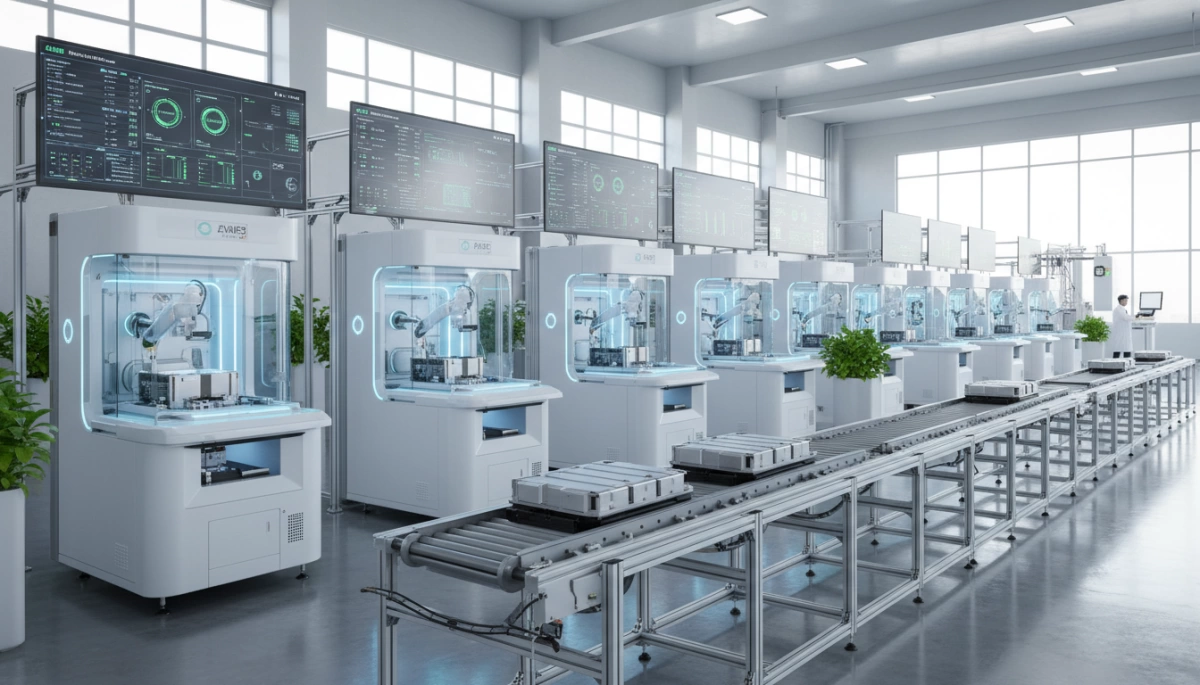
Scaling up production means leaving manual delays behind. In the modern lithium battery manufacturing process, relying on disconnected systems just doesn’t work. We need speed, but we cannot sacrifice accuracy. That is where automation steps in to streamline the entire workflow and eliminate production gridlock.
Moving from isolated manual stations to a fully automated battery assembly line changes the game. It connects every critical phase, particularly during battery forming and testing. Instead of moving cells by hand and risking drops or data mix-ups, automated conveyors and integrated software create a continuous flow. This seamless transition ensures strict quality control while drastically cutting down your production lead times.
We know that charging and discharging thousands of cells requires massive amounts of power. To manage this, we rely on an advanced energy recuperation system to drive down operational costs.
High-throughput handling is how we keep up with surging global demand. When you process thousands of cells a day, human hands are simply too slow.
When it comes to scaling your battery forming and testing operations, who you team up with makes all the difference. We know that building a reliable production line is about minimizing risk and maximizing output.
You need a partner who actually knows the equipment. An experienced provider helps you avoid costly downtime and cuts the risks associated with complex EV battery testing equipment. We bring the hands-on expertise to keep your production moving smoothly and safely.
Your output will grow, and your infrastructure needs to keep up.
Piecing together equipment from ten different vendors creates massive bottlenecks. We provide a single, cohesive ecosystem to handle the entire workflow.
It all comes down to building the Solid Electrolyte Interphase (SEI). We cannot rush this step. If we push the initial charge and discharge cycles too fast, the SEI layer forms poorly. A weak SEI ruins the battery’s lifespan, stability, and overall performance. We take the time upfront to guarantee long-term reliability.
Both are standard checks we run during the battery capacity grading machine process, but they measure different things:
When we use a charge and discharge tester, testing thousands of cells draws a massive amount of power. Instead of burning off the energy from discharging cells as wasted heat, we use regenerative power feedback. This technology captures that outgoing energy and loops it back into the facility’s grid to power other cells that are actively charging. It drastically cuts energy consumption and operating costs.
In high-voltage EV battery systems, safety is non-negotiable. Even a microscopic leak can introduce moisture or let combustible gases escape, directly leading to thermal runaway and battery fires. Rigorous electrolyte leak detection guarantees that the battery thermal management systems stay intact and every cell leaving our line is safe for the road.
