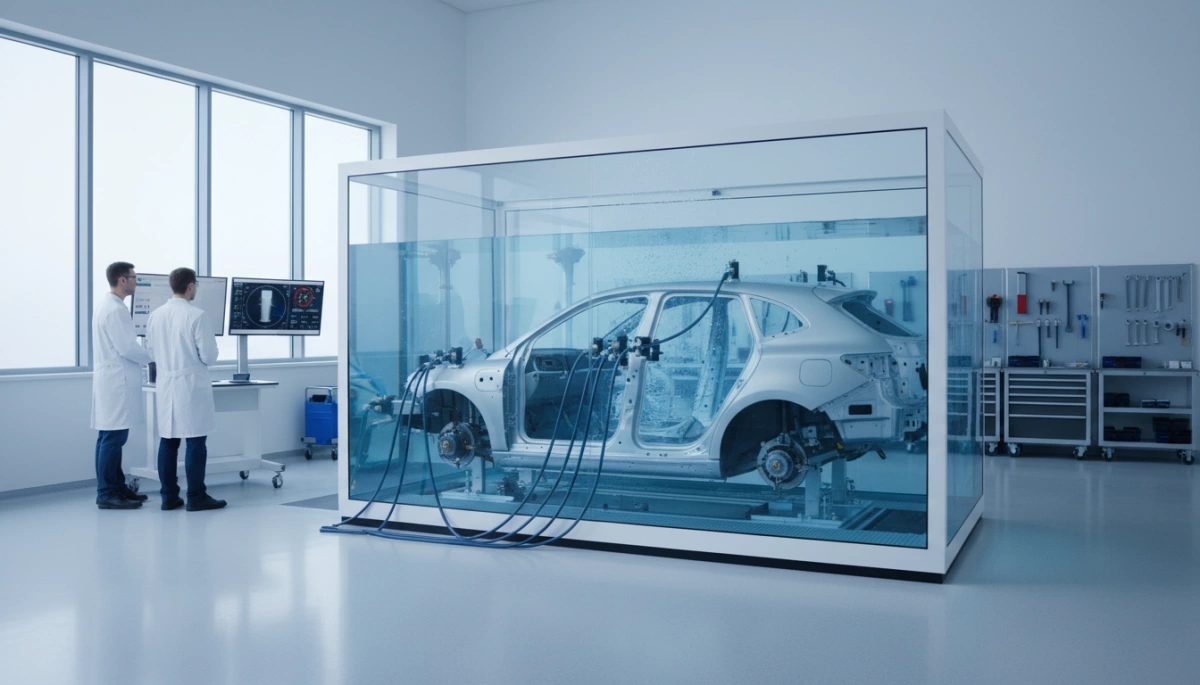
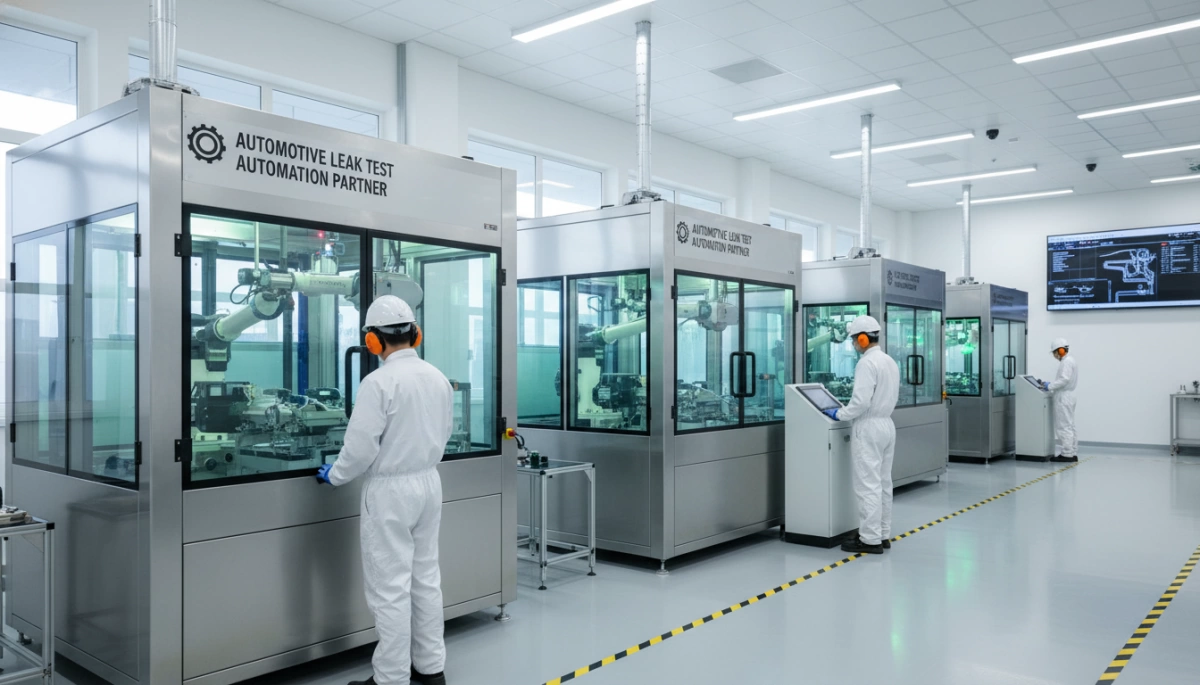
Why Precision Leak Testing is Non-Negotiable in Auto Manufacturing
Are micro-leaks derailing your production line goals and inflating your scrap rates? In modern vehicle assembly, a compromised seal is not just a minor flaw; it is a catastrophic failure waiting to happen. Whether we are dealing with high-voltage enclosures or critical fluid lines, implementing a rigorous automotive leak test is the backbone of reliable automotive quality control.
Meeting Strict IP Standards for ECUs and Battery Packs
Electronics and moisture are a lethal combination. To guarantee long-term performance, electronic control units (ECUs) and EV battery enclosures must meet rigid IP67 waterproof standards.
The Challenge: Even microscopic ingress paths can short-circuit a high-value module.
The Solution: We deploy precision leak verification instruments to ensure total environmental sealing, proving that enclosures can survive harsh road conditions without letting water or dust compromise the electronics.
Safety & Compliance to Prevent Toxic or Flammable Leaks
How do you guarantee absolute safety in fuel or thermal systems? A leak in these components is an immediate, severe safety hazard and a major compliance liability.
Toxic Fluids: Preventing coolant and electrolyte leaks is essential for vehicle longevity and passenger safety.
Flammable Materials: Combustible fuel lines, EV battery module enclosures, and hydrogen cells require zero-tolerance leak thresholds.
Verification: Relying on the vacuum decay method or helium tracer gas testing ensures your assemblies exceed the strictest global safety and environmental regulations.
Protecting the Bottom Line by Catching Defects Early
Scrapping a fully assembled powertrain because of a bad seal is a massive, avoidable hit to your margins. The earlier we catch a defect, the cheaper it is to fix.
Reduce Assembly Scrap: Automated assembly solutions catch casting porosity and gasket issues before a component moves to the next expensive manufacturing phase.
Eliminate Warranty Claims: Implementing high-volume production leak testing prevents defective parts from ever leaving the plant floor, protecting your brand from costly recalls.
Optimize Cycle Times: Integrating a rapid pressure decay leak test early in the production line maximizes throughput while drastically lowering the overall cost of poor quality.
Core Automotive Leak Test Technologies
In our automated assembly solutions, we rely on robust non-destructive testing (NDT) to guarantee automotive quality control. We use three primary methods on the factory floor to verify every part before it ships.
Air Leak Testing
This is our baseline for high-volume production. It is fast, cost-effective, and highly reliable for standard automotive components.
Pressure decay leak test: We pressurize the part and monitor for any drop in pressure over a set time. It is a simple, highly effective way to spot manufacturing flaws.
Vacuum decay method: Instead of pushing air in, we pull a vacuum. This approach is perfect for parts that might deform or get damaged under internal pressure.
Helium Tracer Gas Testing
When dealing with critical systems where even a microscopic flaw is a safety hazard, standard air testing just won’t cut it. We use helium because its tiny molecules can slip through the smallest micro-cracks.
Relies on highly sensitive mass spectrometry leak detection.
Delivers unmatched precision for components requiring zero-tolerance leak limits.
Electrolyte Leak Test System
The rapid shift to electric vehicles demands entirely new leak verification instruments. We implement this specialized testing method specifically for modern EV platforms.
Absolutely essential for safe EV battery leak detection.
Directly sniffs out vaporizing battery solvents, preventing potential electrical shorts, battery degradation, or thermal runaways.
Technology Comparison
Testing Method
Best Used For
Key Advantage
Air Leak Test
General automotive components
High speed and low operating cost
Helium Tracer Test
High-pressure systems & fuel lines
Extreme sensitivity for micro-leaks
Electrolyte Test
EV battery cells and battery packs
Targeted detection of battery chemistry
Critical Components Requiring an Automotive Leak Test
In our production lines, a single faulty seal is a massive liability. We rely on strict automotive leak test protocols to verify the structural integrity of every critical part before it ever hits the road. Here is exactly where we focus our testing efforts.
EV Battery Leak Detection
Electric vehicles demand absolute perfection when it comes to sealing. We target the core of the power system to meet strict IP67 waterproof standards:
Battery Trays and Covers: Keeping environmental moisture and dirt out.
Cooling Plates: Preventing internal coolant leaks from shorting the system.
Battery Cells: Ensuring no hazardous materials or gases escape.
Thermal Management & HVAC
A vehicle’s temperature control systems handle constant pressure changes and harsh conditions. To prevent system failures, a proper cooling circuit leak test is mandatory for:
Radiators and Chillers: Securing the main heat exchange units against fluid loss.
Refrigerant Lines: Blocking the invisible escape of A/C gases to maintain cabin comfort.
Powertrain & Fuel Systems
Whether we are dealing with hybrids or traditional combustion, we use advanced powertrain testing equipment to handle high-stress environments. We rigorously test these components to prevent toxic or flammable leaks:
Fuel Tanks: Securing the storage system against vapor and liquid leaks.
Injection Rails: Handling high-pressure fuel delivery without a drop of waste.
Cylinder Heads: Ensuring a perfect, durable seal under extreme engine heat and vibration.
Overcoming Challenges in High-Volume Automotive Leak Tests
Setting up a high-volume production leak testing system brings unique hurdles. We constantly face the pressure to keep the assembly line moving fast without missing a single microscopic defect. Here is how we tackle the biggest challenges on the factory floor.
Balancing Cycle Time and Accuracy
In automated assembly solutions, speed dictates profitability. However, rushing an automotive leak test leads to false passes or false failures. We engineer our systems to hit the exact sweet spot between rapid throughput and precise detection.
Fast stabilization: We use advanced sensors and minimize internal test volumes to drastically cut down wait times.
Smart algorithms: Our software instantly filters out background noise, factory vibrations, and temperature shifts that could skew the data.
Custom Tooling and Reliable Sealing
Modern auto components feature complex geometries, rough cast surfaces, and difficult angles. Off-the-shelf clamps simply fail under these conditions.
Precision engineered seals: We design custom urethane or silicone seals that perfectly match the specific profile of the part being tested.
Automated clamping: We utilize pneumatic or servo-driven clamps to apply uniform pressure every single time, ensuring our leak verification instruments get a pristine, reliable reading.
Data Integration for Factory Traceability
Running the test is only half the job; proving the part passed is just as critical for modern automotive quality control.
Real-time tracking: Every single test result is immediately tied to the component’s unique barcode, serial number, or RFID tag.
Seamless networks: We push all test data straight into the plant’s Manufacturing Execution System (MES), guaranteeing total factory traceability and allowing us to spot production trends or line bottlenecks instantly.
Choosing an Automotive Leak Test Partner
Finding the right automation partner isn’t just about buying hardware. It is about securing your entire automotive quality control process. I’ve seen lines stall simply because integration was an afterthought. Here is exactly what you need to look for to keep production moving.
System Integration
Your automotive leak test setup must connect flawlessly with the rest of your floor. Seamless data flow across your automated assembly solutions is mandatory. If your leak verification instruments cannot communicate natively with your main factory system, you lose valuable data and traceability.
Proven Track Record
Experience dictates success. I always evaluate a vendor’s background in cross-industry design. A partner who handles high-volume production leak testing for demanding sectors—like aerospace or medical—brings proven, rugged engineering directly to your automotive line.
Partner Evaluation Criteria
Evaluation Focus
Direct Production Impact
System Integration
Syncs equipment across the assembly process to prevent data silos.
Track Record
Adapts proven cross-industry designs to your specific component needs.
Project Speed
Hits strict launch dates without compromising testing accuracy.
After-Sales Support
Keeps powertrain testing equipment and lines running 24/7.
Speed and Long-Term Support
Execution speed and tight project management keep your vehicle launch on schedule. However, the real test of a reliable partner is their after-sales support. When an automated line goes down or a calibration issue arises, you need immediate, hands-on backing to get your testing systems back online fast.
Automotive Leak Test FAQs
What is the standard acceptable leak rate?
There is no single universal number. The acceptable leak rate depends entirely on the specific component and its function on the vehicle.
Water and Dust Protection: Parts built to meet IP67 waterproof standards have manageable, predefined thresholds just to keep out the elements.
Fluids and Gases: A cooling circuit leak test allows for different leak rates compared to fuel tanks or A/C systems, which require incredibly tight limits to prevent dangerous fuel or refrigerant loss. We define the exact acceptable rate based on strict safety protocols and the component’s operating pressure.
How does EV battery leak testing differ from traditional fluid systems?
Traditional automotive components are usually rigid metal castings or thick plastics. EV battery leak detection, however, involves massive, flexible casings that can actually expand or warp under pressure.
Zero Tolerance: EV batteries have zero tolerance for internal moisture or escaping chemical vapors.
Advanced Equipment: Because of these strict safety demands, we cannot rely on standard powertrain testing equipment. Instead, we use a dedicated electrolyte leak test system or highly sensitive mass spectrometry leak detection for a battery module leak test to catch microscopic flaws that traditional methods miss.
Which method is fastest for high-volume production?
For raw speed on the assembly line, air-based testing is the undisputed champion.
Top Performers: The pressure decay leak test and the vacuum decay method are the fastest options available for high-volume production leak testing.
Easy Integration: These methods run on basic compressed air, finish their cycles in seconds, and integrate seamlessly into automated assembly solutions. We reserve slower, ultra-sensitive methods like helium tracer gas testing specifically for complex parts that require extreme, microscopic precision.