Address
Bldg-1, No.19, Yunpu 1st Road, Huangpu District, Guangzhou, Guangdong, China, 510530
Work Hours
Monday to Friday: 8:30AM - 5:30PM
Address
Bldg-1, No.19, Yunpu 1st Road, Huangpu District, Guangzhou, Guangdong, China, 510530
Work Hours
Monday to Friday: 8:30AM - 5:30PM

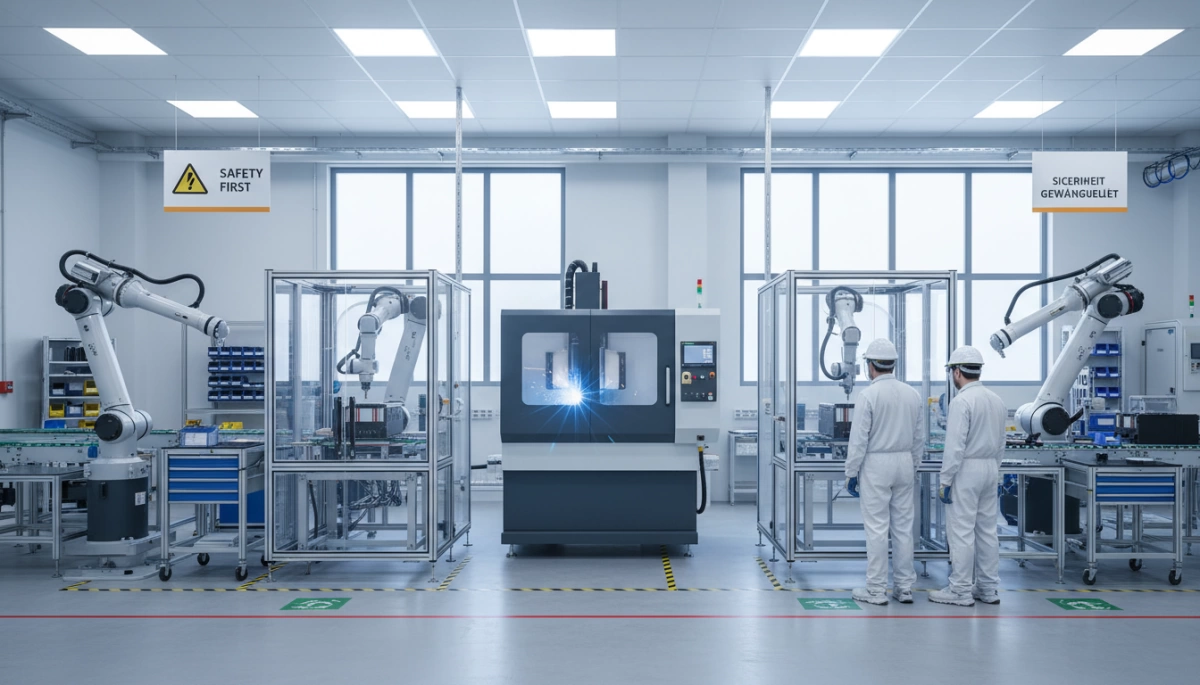
When we design and implement an automated battery production line, the core of the operation lies in the precision of the battery module assembly. Any misstep in this phase impacts the safety, efficiency, and lifespan of the final EV battery pack. We break this complex manufacturing process down into five highly automated, critical stages.
Before assembly begins, every single incoming cell must meet strict quality standards. We simply cannot afford to integrate inconsistent cells into a high-performance EV battery pack.
Handling varying cell geometries—whether managing a prismatic cell assembly or a high-density cylindrical battery module—requires absolute precision.
Heat is the primary enemy of battery efficiency and longevity. Integrating robust battery thermal management systems directly into the module is a non-negotiable step.
Creating secure, low-resistance electrical connections is arguably the most sensitive phase of module construction. We utilize customized busbar connections and deploy industry-leading welding techniques based on the specific cell architecture.
| Joining Technology | Application Profile | Key Advantages |
|---|---|---|
| Laser Welding | Prismatic and large cylindrical cells | High speed, deep penetration, minimal heat-affected zone, highly automated. |
| Ultrasonic Welding | Pouch cells and thinner foil tabs | Low temperature process, excellent for joining dissimilar metals (e.g., Aluminum to Copper). |
Once the electrical and thermal systems are fully integrated, the module must be structurally secured and sealed against harsh environmental factors.
By strictly controlling these five stages, we ensure every battery module assembly rolling off the line delivers the exact safety, durability, and energy density demanded by modern electric vehicle powertrain manufacturing.
Building a reliable electric vehicle powertrain manufacturing system isn’t easy. When scaling up production, we face two massive hurdles that can make or break an operation.
Speed and precision usually fight against each other. In a modern automated battery production line, the goal is aggressive, but necessary:
You cannot sacrifice precision for speed. If the handling is too rough, the cells fail. If the line is too slow, the operation isn’t profitable.
Handling raw energy requires extreme caution. During battery module assembly, a single damaged cell can trigger a dangerous chain reaction.
We build our lines to ensure that safety on the factory floor never takes a backseat to production speed.
Before any unit leaves our floor, we must guarantee it is safe, stable, and ready to perform. In the battery module assembly process, end-of-line battery testing is strictly non-negotiable.
We rely on rigorous end-of-line checks to verify two critical factors before final pack integration:
Even a microscopic flaw can compromise safety. To prevent moisture ingress or dangerous thermal events, we utilize multiple layers of advanced testing.
Here is how we verify the seal on every unit:
| Testing Method | Practical Application |
|---|---|
| Air Leak Testing | A fast, reliable baseline check. We use air pressure decay to confirm the overall structural seal of the housing. |
| Helium Leak Test Battery Pack | The standard for catching microscopic faults. Because helium molecules are tiny, they easily escape through hairline cracks, allowing us to pinpoint breaches air testing might miss. |
| Electrolyte Leak Detection System | Using advanced vapor sensors like the MSQ2000, we directly detect escaping cell solvents. This guarantees no internal fluids are leaking from the cells themselves. |
The EV market is evolving rapidly. While standard battery module assembly remains a core process, we are witnessing a massive industry shift toward streamlined designs. Understanding this transition is key to staying competitive in production.
Cell-to-pack (CTP) architecture completely skips the traditional module phase. Instead of grouping cells into intermediate modules before packing them, we integrate the cells directly into the main battery pack enclosure.
Here is why this method is gaining massive traction:
Despite the undeniable rise of CTP, standard battery module assembly isn’t going anywhere just yet. Many automakers still rely on modular setups for easier post-sale maintenance, targeted thermal control, and specific crash safety requirements.
Because of this split in the market, rigid, single-purpose manufacturing lines are becoming a liability. Today, high flexibility is non-negotiable.
We engineer industrial automation solutions that adapt to multiple architectures. Hybrid assembly lines are now the industry standard because they empower manufacturers to:
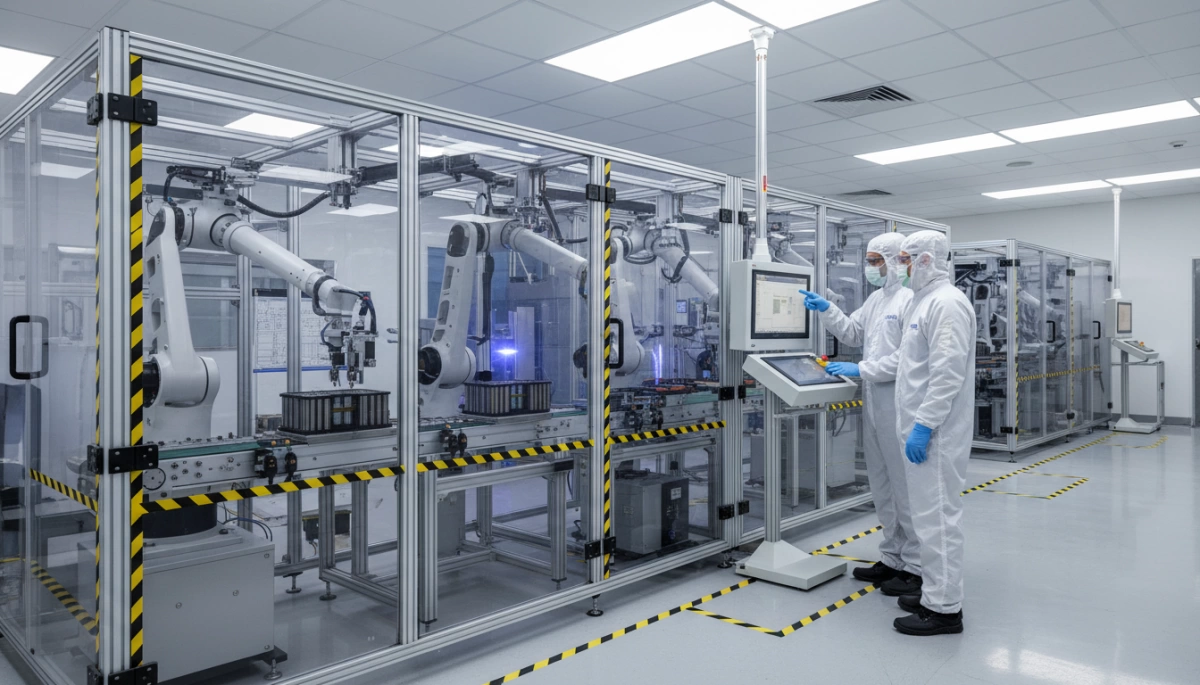
When setting up an automated battery production line, experience is your best asset. At Upton, we have spent over 20 years perfecting high-tech intelligent equipment. We know exactly what it takes to build manufacturing lines that are reliable, fast, and ready to scale for the global market.
We do not just supply machinery; we deliver complete systems tailored specifically for battery module assembly and electric vehicle powertrain manufacturing.
The EV market moves fast, and your production timeline cannot afford delays. We ensure your equipment hits the factory floor exactly when you need it.
In traditional battery module assembly, individual battery cells are grouped and secured into smaller units (modules) before being loaded into the main battery pack. Cell-to-pack (CTP) architecture skips this middle step entirely. By integrating cells directly into the final pack, CTP eliminates the bulky module casings. This streamlined approach reduces total weight, frees up valuable space, and dramatically increases the energy density of modern electric vehicle powertrain manufacturing.
When building an automated battery production line, laser welding battery cells is the most reliable method for making busbar connections. While older ultrasonic welding methods are still around, laser welding delivers unmatched speed, deeper penetration, and structural strength. These high-precision battery pack joining technologies create durable connections capable of handling high electrical loads and the physical vibrations of the road.
To prevent dangerous thermal runaway events, strict end-of-line battery testing is required before the module ever reaches final pack integration. We ensure the complete integrity of the battery thermal management systems and cell casings through a series of automated checks:
