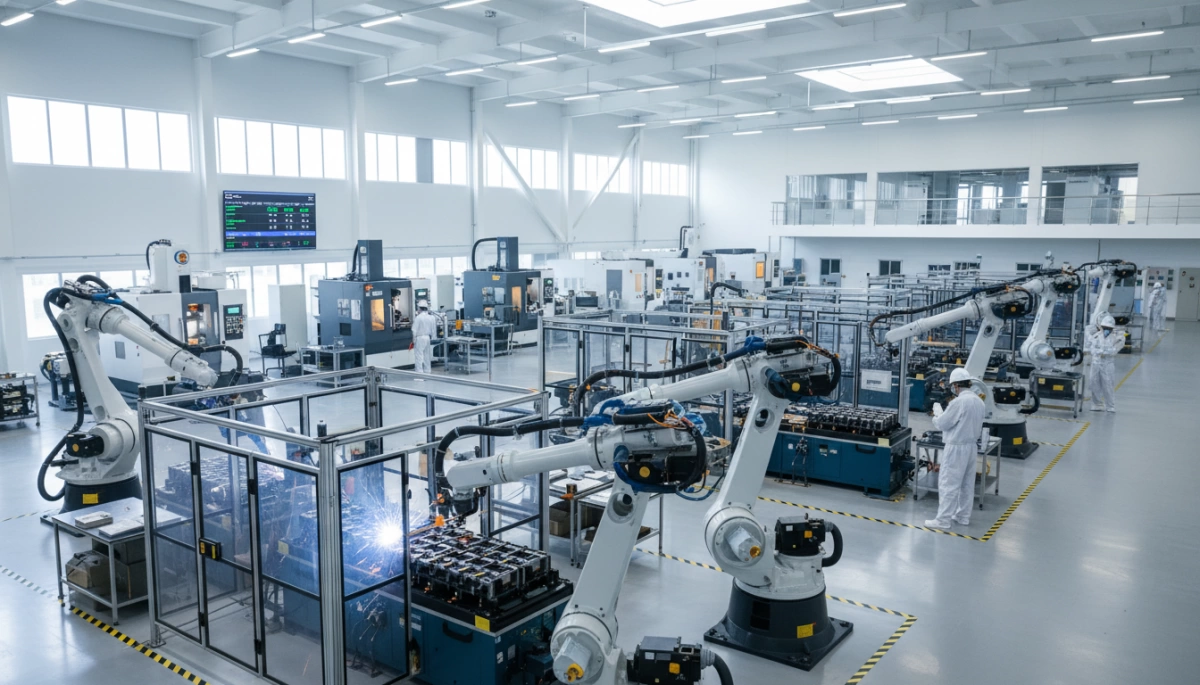
Are you struggling to scale your EV production without sacrificing precision or driving up labor costs?
You might already know that building high-voltage architectures requires incredibly tight defect tolerances. A single error on the line—like an undetected electrolyte leak—can cost millions in recalls and damaged reputations.
But how do you implement the right new energy vehicle automation to guarantee flawless assembly and absolute safety every single time?
As an automation partner with over 20 years of high-tech design experience, we know exactly what it takes to build a highly efficient, world-class EV battery assembly line.
In this ultimate guide, you are going to learn the exact framework for integrating automated manufacturing solutions and intelligent production lines into your facility.
From scaling up structural bonding to implementing foolproof electrolyte leak testing, we have put together the complete blueprint for plant managers and manufacturing engineers.
Let’s dive right in.
Understanding New Energy Vehicle Automation
Are you struggling to scale production while keeping high-voltage defect rates at absolute zero? You are not alone. When we talk about new energy vehicle automation, we are not talking about cars driving themselves. We are talking about the factory floor.
It is the deployment of intelligent production lines, precision robotics, and advanced testing protocols to physically build electric vehicles. This discipline covers everything from the EV battery assembly line to rigorous automated quality control.
Why Traditional Lines Fail EVs
You cannot build tomorrow’s electric vehicles on yesterday’s engine lines. The shift from internal combustion engines (ICE) to EVs demands an entirely new automated manufacturing architecture. Here is exactly why:
High-Voltage Complexity: EVs rely on massive battery packs and sensitive power electronics, requiring highly specialized robotic integration for EVs to handle components safely.
Zero Defect Tolerance: Unlike a minor oil weep in an ICE, an electrolyte leak in an EV battery is catastrophic. We must deploy advanced automated manufacturing solutions to catch what human operators cannot.
Structural Differences: Heavy battery modules require heavy-duty, high-precision automated material handling. Traditional powertrain lines simply cannot support these loads or precision requirements.
To meet surging global demand, upgrading to dedicated NEV manufacturing equipment is not just an option—it is the absolute baseline for market survival.
Drivers of New Energy Vehicle Automation
As we scale up our operations, we see three massive forces pushing the industry toward complete electric vehicle production automation. Building an EV is fundamentally different from building a gas car, and the assembly floor has to reflect that reality.
Here is exactly what is driving this shift:
Scaling Up for Global Demand: The market appetite for EVs is surging. To push out vehicles faster without bottlenecking, upgrading to automated manufacturing solutions and intelligent production lines is the only viable way to hit these aggressive production targets.
Absolute Precision for High-Voltage: EVs are high-voltage systems. This means our defect tolerance must be practically zero compared to traditional combustion engines. Relying on advanced NEV manufacturing equipment guarantees that every battery module and connection is completely flawless and safe.
Slashing Costs with Smart Tech: Manufacturing overhead is rising across the board. By leaning heavily into robotic integration for EVs and smart manufacturing logistics, we directly offset these labor costs. Intelligent machines handle the heavy, repetitive lifting, keeping the whole floor lean, fast, and highly efficient.
Core Areas in New Energy Vehicle Automation
EV Battery Assembly Line
In our battery manufacturing process, precision is everything. Handling delicate battery cells safely requires highly reliable automated manufacturing solutions. Through intelligent automated production line design, we manage the most complex parts of the build to guarantee thermal management and structural integrity:
Structural Bonding: Applying exact adhesive beads for pack stability.
Laser Welding: Securing flawless connections across the battery module assembly.
Cell Handling: Moving highly volatile components safely at scale.
Automated Quality Control & Electrolyte Leak Testing
Automated testing is absolutely non-negotiable in new energy vehicle automation. A battery electrolyte leak is a critical safety hazard that can lead to catastrophic failures. To solve this industry-wide challenge, we deploy specialized testing technology to keep defective units off the road:
Upton MSQ2000 System: Our premier solution specifically designed for fast, highly accurate electrolyte leak testing.
Helium Leak Test Equipment: Catches microscopic flaws in battery pack casings and cooling channels.
Air Leak Testing: Guarantees total environmental sealing before final integration.
Powertrain & Electronic Component Assembly
Beyond the battery pack, intelligent production lines drive the vehicle’s core mechanics. We fully automate the manufacturing of electric motors to keep up with high-volume global demand. Furthermore, our robotic integration for EVs handles the most delicate electronic work—precisely placing FPC soft boards and wiring complex control units with absolute accuracy.
Turnkey vs. Custom New Energy Vehicle Automation
When investing in new energy vehicle automation, you generally face a choice between standardized equipment and fully customized setups. Deciding between the two depends entirely on your specific production targets, budget, and facility layout.
Standard vs. Custom Systems
Turnkey Assembly Systems: These are ready-to-deploy, standardized automated manufacturing solutions. They offer faster installation and lower upfront costs. If you are manufacturing standard EV components with predictable specs, turnkey equipment gets your production running quickly.
Custom Automation Engineering: These are fully tailored, end-to-end intelligent production lines designed specifically for your unique product. While they take longer to build, they are essential for complex, proprietary designs—like highly specialized battery module assembly workflows that demand unique robotic handling.
Evaluating Automation Suppliers
Selecting the right industrial automation supplier requires matching their engineering expertise with your operational reality. Here is how I recommend evaluating a potential partner:
Project Scale: Can they handle your current volume and scale up? Your partner needs the capacity and financial stability to support everything from a small pilot line to full mass production.
Facility Constraints: A capable supplier works within your physical limits. The integration of robots and smart manufacturing logistics must fit seamlessly into your existing floor plan without creating workflow bottlenecks.
Production Goals: Your partner must design the line around your target cycle times and defect tolerances. Whether you need a simple modular setup or specialized helium leak test equipment integrated directly into the line, the final solution must guarantee your exact output metrics.
Choosing Your New Energy Vehicle Automation Partner
When scaling your production, selecting the right partner for new energy vehicle automation is just as critical as the technology itself. We know that launching a successful EV line leaves zero room for trial and error. You need an engineering partner who understands the global stakes and executes without delays.
Here is exactly what you must demand when evaluating industrial automation suppliers:
A Proven Track Record: Don’t settle for newcomers. Look for a partner with decades of hands-on experience building high-tech intelligent equipment. We have learned firsthand that deep industry experience is the only way to anticipate and solve manufacturing bottlenecks before they stall your floor.
Rapid Deployment & Project Management: In the fast-paced EV market, time-to-market is everything. You need a team with a proactive service strategy and tight project management to guarantee fast delivery. If your partner cannot meet aggressive deadlines, even the best custom automation engineering won’t save your launch.
Uncompromising Quality Assurance: Never skip the fundamentals. Your supplier must possess verifiable ISO certifications and rich design experience. This strict adherence to quality guarantees that your automated quality control systems and assembly lines meet rigorous global standards from day one.
New Energy Vehicle Automation Partner
At Upton, we have spent over 20 years evolving into a leading high-tech intelligent equipment group. We understand the high stakes of electric vehicle production automation and build systems that flat-out perform.
Core Strengths
When evaluating industrial automation suppliers, you need a team that executes. Here is what we deliver:
Rich Design Experience: We engineer intelligent production lines built specifically for heavy-duty scaling and absolute precision.
Fast Delivery: Our elite project management team ensures your automated manufacturing solutions hit the factory floor exactly on schedule.
Proactive Customer Service: We do not just drop off the equipment. We provide hands-on, ongoing support long after the initial installation.
End-to-End Capabilities: From integrating your EV battery assembly line to deploying advanced automated quality control and test technology, we manage the entire process.
We bring deep, practical expertise to every project, ensuring your custom automation engineering and turnkey assembly systems run flawlessly from day one.