Address
Bldg-1, No.19, Yunpu 1st Road, Huangpu District, Guangzhou, Guangdong, China, 510530
Work Hours
Monday to Friday: 8:30AM - 5:30PM
Address
Bldg-1, No.19, Yunpu 1st Road, Huangpu District, Guangzhou, Guangdong, China, 510530
Work Hours
Monday to Friday: 8:30AM - 5:30PM

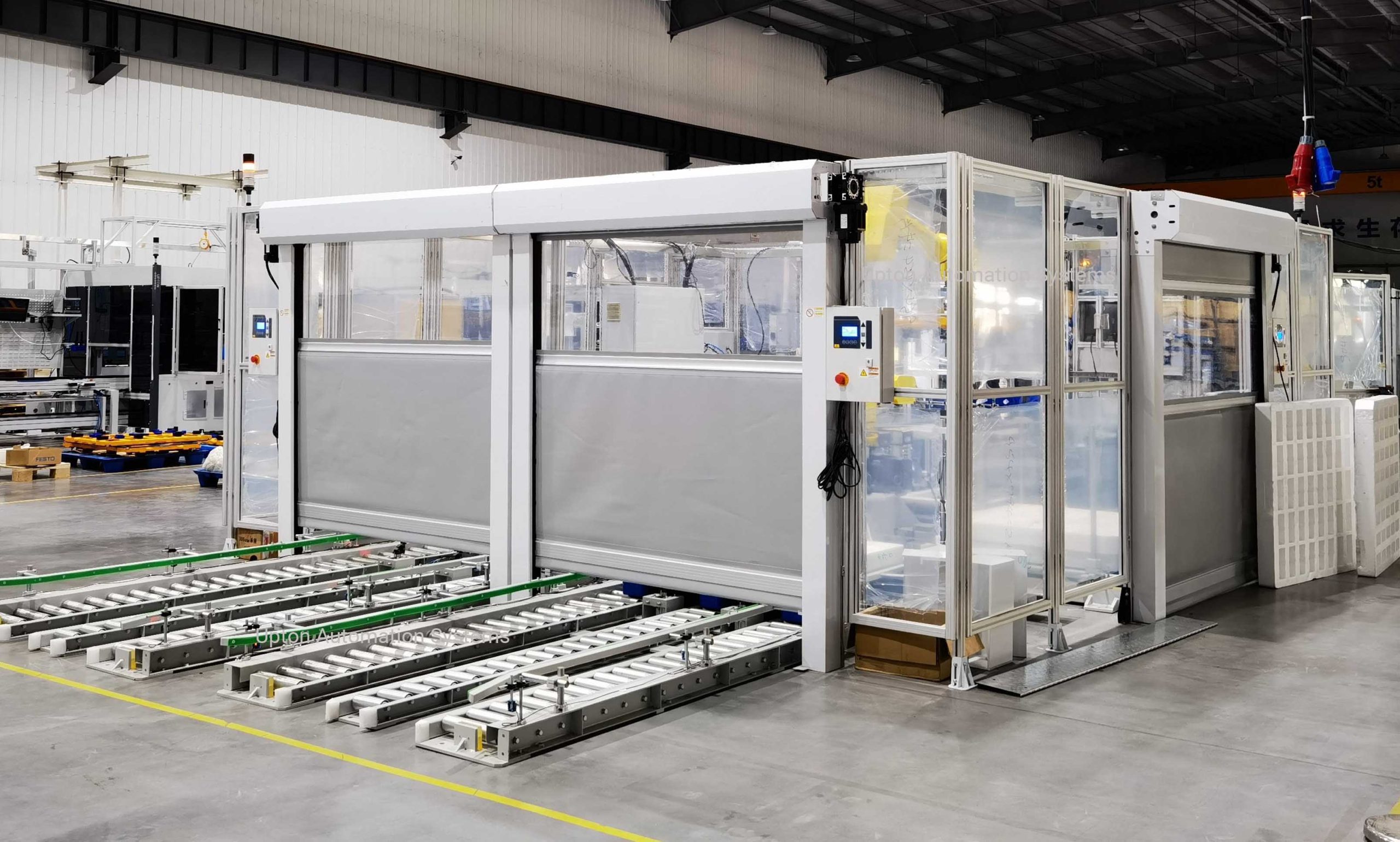
Vacuum leak testing relies on a simple principle of physics: fluids and gases naturally move from areas of higher pressure to areas of lower pressure. When we place a test specimen inside a vacuum tank leak detector or evacuate the component itself, we create a pressure differential. If a defect, crack, or micro-pore exists in the structure, the higher atmospheric pressure outside forces gas molecules into the lower-pressure vacuum environment.
By measuring this movement of gas, we can detect even the smallest structural compromises without damaging the product. This non-destructive testing (NDT) approach ensures seal integrity validation across various manufacturing and packaging applications.
While both methods identify structural flaws by monitoring pressure changes over time, they approach the problem from opposite directions. Choosing the right method depends on your specific product geometry and testing requirements.
| Feature | Pressure Decay Testing | Vacuum Decay Testing |
| Direction of Flow | Outward (Inside to Outside) | Inward (Outside to Inside) |
| Stress Form | Positive Internal Pressure | External Atmospheric Press |
| Main Metric | Pressure drop monitoring | Pressure rise method |
| Best Used For | Rigid components, high-pressure lines | Flexible packaging, sealed electronics |
| Risk Factor | Can mask defects by expanding materials | Pulls seals closed or opens hidden paths |
During a pressure decay test, we pressurize the internal volume of a part and look for a differential pressure drop. Conversely, vacuum decay testing involves evacuating an industrial vacuum chamber containing the test sample. We then isolate the system and monitor for any volatile pressure rise, which indicates that outside air or gas is leaking into the evacuated zone.
To quantify these leaks accurately, we rely on gas laws and volumetric calculations. The core behavior of the system is governed by the Ideal Gas Law:
$$PV = nRT$$
Where $P$ is pressure, $V$ is volume, $n$ is the amount of gas, $R$ is the universal gas constant, and $T$ is absolute temperature. Because we maintain a stable temperature during the test cycle, any change in pressure directly correlates to a change in the gas mass within the known volume.
To determine if a part passes or fails, we use the acceptable leak rate calculation:
$$Q = frac{Delta P cdot V}{Delta t}$$
By establishing a precise baseline for $Q$, our systems instantly flag any anomalies that exceed acceptable engineering tolerances.
Choosing the right approach depends entirely on your specific industry, the container type, and your required sensitivity. We engineer our vacuum tank leak detector systems to utilize several core methodologies, ensuring reliable non-destructive testing (NDT) across diverse applications.
These two complementary techniques rely on precise pressure drop monitoring within a sealed environment to flag integrity failures.
For high-throughput lines, we use the following formula to determine the acceptable leak rate calculation:
| Method | Target Metric | Best Used For |
| Vacuum Decay | Pressure rise in test chamber | High-volume flexible packaging quality control |
| Pressure Rise | Pressure rise inside isolated tank | Large industrial vessels and industrial vacuum chambers |
For a visual, definitive pinpointing of defects, the bubble emission technique remains an industry staple.
When dealing with ultra-tight tolerances where micro-leaks can cause catastrophic failure, we integrate tracer gas systems.
Storage tanks handling hazardous materials require permanent, around-the-clock vigilance rather than periodic checks.
To achieve precise seal integrity validation, a commercial vacuum tank leak detector relies on heavy-duty hardware and smart data architecture. We engineer our industrial vacuum chambers and test systems to hit exact, repeatable metrics under continuous operation.
Every system we build integrates high-grade components to isolate fine pressure drop monitoring variations without false readings.
| Component | Technical Specification | Function |
| Pressure Transducer | Resolution down to 0.01 Pa | Measures micro-changes in vacuum levels |
| Vacuum Pump | Two-stage rotary vane / dry scroll | Rapidly evacuates the chamber to baseline pressure |
| Control Valves | High-cycle pneumatic isolation valves | Eliminates cross-talk between reference and test volumes |
Raw hardware is only as good as the software managing it. Our systems turn rapid pneumatic changes into clear, actionable quality control data.
We see firsthand how industries rely on a vacuum tank leak detector to safeguard their products, protect the environment, and hit strict regulatory marks. Whether it is ensuring a snack bag doesn’t go stale or preventing a massive chemical spill, precise non-destructive testing (NDT) is non-negotiable.
In high-volume manufacturing, seal integrity validation is everything. Companies utilize our testing setups for flexible packaging quality control to catch micro-leaks before products ship.
Downstream and midstream operations handle hazardous materials where a single failure is catastrophic. Here, leak detection scales up to heavy-duty industrial vacuum chambers and massive storage units.
| Application | Detection Method | Regulatory / Operational Focus |
| Storage Tanks | Double-walled tank leak detection | EPA regulations, groundwater protection, and interstitial space monitoring. |
| Process Piping | Pressure rise method & tracer gas | Prevention of volatile organic compound (VOC) emissions. |
| Heat Exchangers | Heat exchanger tube testing tools | Maintaining thermal efficiency and preventing cross-contamination of fluids. |
By integrating automated vacuum decay testing into the workflow, processing plants keep their operations compliant with local environmental laws while avoiding costly unscheduled shutdowns.
Getting inaccurate readings or false positives during non-destructive testing (NDT) wastes time and drives up costs. To ensure your vacuum tank leak detector delivers precise, repeatable results, we focus on three critical areas of system management.
Temperature shifts and sudden pressure drops can mimic a real leak. When a vacuum is first pulled, the air inside the chamber cools rapidly.
A vacuum tank leak detector is only as reliable as its seals. If the connection between the test equipment and the part is compromised, the entire test fails.
| Common Seal Issues | Operational Impact | Solution |
| Worn Elastomer O-rings | Micro-gaps allow ambient air to bleed into the industrial vacuum chambers. | Implement a strict PM schedule to replace seals before they degrade. |
| Surface Contamination | Oils, dust, or debris prevent a flush, airtight connection. | Clean sealing surfaces daily using approved, residue-free solvents. |
| Incorrect Clamping Pressure | Uneven loading distorts the seal, causing a differential pressure drop. | Use automated or calibrated pneumatic clamps for uniform pressure. |
Regular calibration keeps your system aligned with global standards and ensures your acceptable leak rate calculation remains exact.
We design our leak testing systems to eliminate guesswork on the factory floor. When production speed matches strict quality mandates, you need a vacuum tank leak detector that delivers definitive, repeatable results without slowing down your throughput. Our systems combine structural rigidity with high-sensitivity pneumatic circuits to capture microscopic defects instantly.
Every system we build centers on absolute measurement accuracy. We eliminate the common variables that skew test data—like ambient temperature shifts and minor structural flexing—by using heavy-duty, CNC-machined industrial vacuum chambers and premium differential pressure sensors.
No two production lines are identical, which is why we reject the one-size-fits-all approach. Our testing platforms easily scale from manual, benchtop quality control stations to multi-chamber, fully automated inline systems.
| System Type | Primary Application | Ideal For |
| Compact Benchtop | Batch testing & lab validation | Flexible packaging quality control |
| Automated Inline | High-volume continuous production | Automotive components & electronic enclosures |
| Custom Engineered | Large-scale or unique geometries | Double-walled tank leak detection & process vessels |
A great vacuum tank leak detector shouldn’t exist on an island. Our equipment integrates directly with your existing factory ecosystem, supporting modern industrial communication protocols like Profinet, EtherNet/IP, and Modbus TCP. This connectivity ensures that seal integrity validation data logs automatically into your MES or ERP system for total traceability. With programmable digital I/O, controlling upstream feeding systems or downstream reject gates takes minimal configuration, keeping your automated workflow fast, reliable, and completely hands-free.
While both are essential non-destructive testing (NDT) methods, they approach pressure from opposite directions.
Double-walled tank leak detection relies on continuous monitoring of the buffer zone, known as the interstitial space, located between the inner and outer walls.
This interstitial space monitoring ensures that a leak in the primary containment tank is detected before any hazardous materials escape into the environment.
Compliance keeps your operations running safely. Several major standards govern how we build and calibrate our vacuum tank leak detector units:
| Standard | Focus Area | Application |
| ASTM D3078 | ASTM D3078 bubble emission | Testing for leaks in flexible packaging by bubble emission. |
| ASTM F2096 | Gross leak detection | Internal pressurization bubble testing for medical packaging. |
| ASTM E499 | Tracer gas sniffing | Mass spectrometer testing using helium for high-sensitivity tracking. |
To maintain absolute seal integrity validation, standard industrial practice requires calibrating your system at least once every 12 months.
However, you should increase calibration frequency to a quarterly or monthly basis if you operate under high-throughput production, strict medical or automotive regulations, or if the equipment has undergone a major maintenance cycle. Regular tracking ensures your acceptable leak rate calculation remains accurate and prevents costly false positives on the production line.
