Address
Bldg-1, No.19, Yunpu 1st Road, Huangpu District, Guangzhou, Guangdong, China, 510530
Work Hours
Monday to Friday: 8:30AM - 5:30PM
Address
Bldg-1, No.19, Yunpu 1st Road, Huangpu District, Guangzhou, Guangdong, China, 510530
Work Hours
Monday to Friday: 8:30AM - 5:30PM

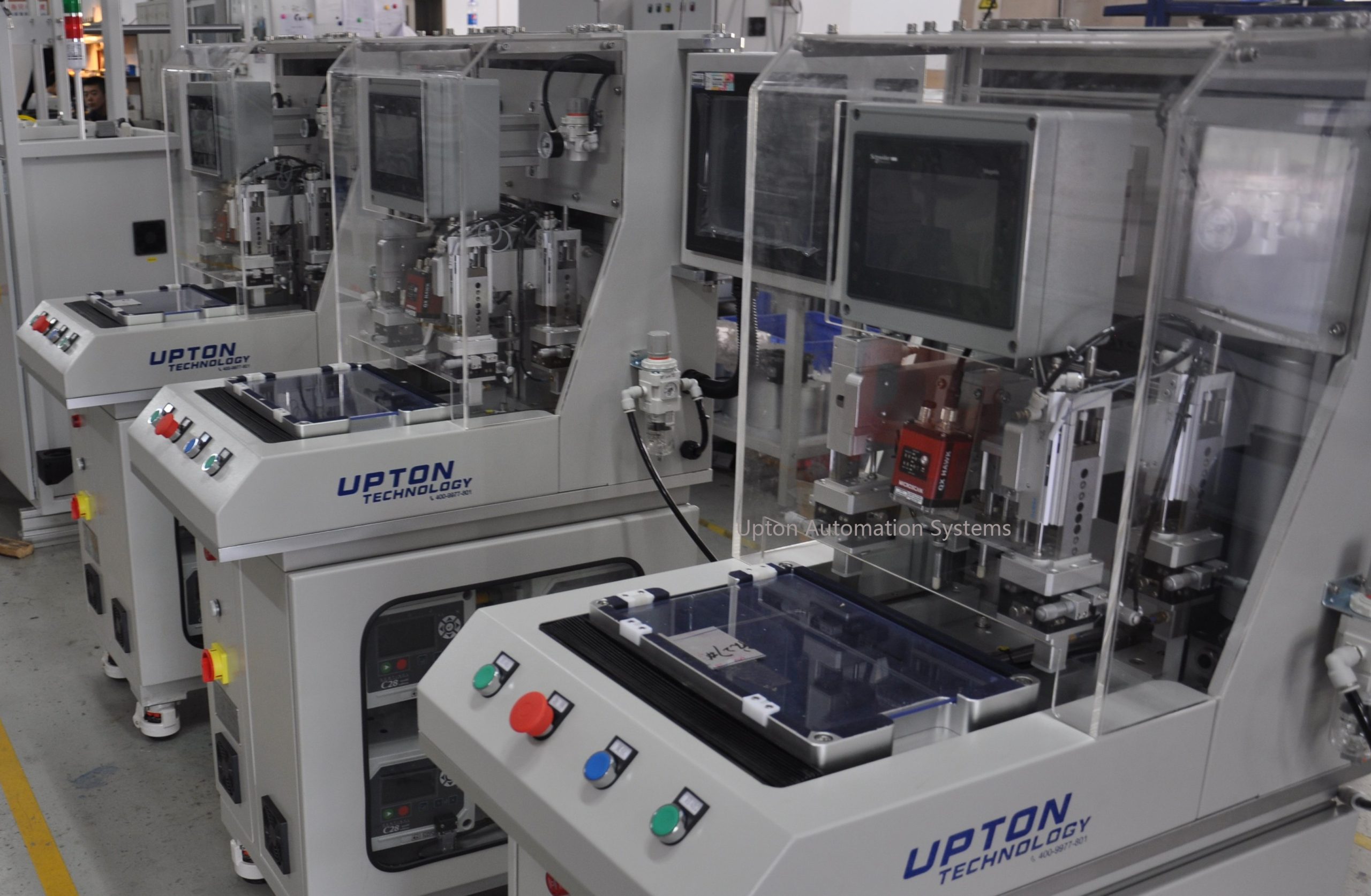
When you are running a high-throughput production line, you cannot afford to guess if a part is sealed correctly. You need to know instantly. That is where a mass flow leak tester comes in. Unlike traditional methods that guess leak rates by watching pressure drop over time, this instrument directly measures the actual amount of air escaping from a part. It is the definitive solution for non-destructive leak testing, giving you a real-world, volumetric measurement of a leak as it happens.
The science behind this process relies on the conservation of mass. When we pressurize a test part to a specific target pressure, any exit pathway—no matter how microscopic—causes air to escape. To maintain that steady test pressure inside the part, makeup air must flow into the system to replace the lost volume.
By measuring the exact mass of the air moving into the system to stabilize the pressure, we calculate the direct leakage measurement. We measure this rate precisely in volumetric leak rate (sccm), or Standard Cubic Centimeters per Minute.
To achieve high accuracy without sacrificing cycle time, our air leak test equipment utilizes a sophisticated dual sensor system.
By separating pressure regulation from flow measurement, the system isolates variables and delivers an incredibly fast, highly repeatable reading. You get a clear, uncompromised data point that tells you exactly how your part performs under pressure, keeping your inline production quality control moving without bottlenecks.
When choosing a mass flow leak tester, understanding the exact mechanics of how air moves inside the system is everything. Not all flow sensors handle leaks the same way. We primarily design and utilize two distinct technologies depending on your line’s cycle time and accuracy requirements.
Thermal mass flow sensors use a heated element placed directly in the air stream. As air leaks out of your part, it flows past this element, cooling it down. The sensor measures the amount of electrical current needed to maintain the element’s temperature.
For high-performance air leak test equipment, differential mass flow testing is the industry gold standard. Instead of measuring raw flow into a single part, this method uses a highly sensitive mass flow sensor positioned between your test part and a sealed reference volume.
| Feature | Thermal Mass Flow | Differential Mass Flow |
| Measurement Style | Direct inline flow | Cross-bridge differential flow |
| Cycle Time Speed | Moderate (requires stabilization) | Extremely Fast (ideal for inline production quality control) |
| Sensitivity | High | Ultra-High (detects micro-leaks instantly) |
| Best Used For | Continuous flow and industrial occlusion testing | Large volume leak detection and high-speed automotive/medical lines |
| System Complexity | Standard single-channel setup | Advanced pneumatic circuit with reference volume |
Choosing between a mass flow leak tester and traditional pressure decay equipment comes down to how your part behaves under pressure. While both are excellent non-destructive leak testing methods, they look at data differently.
Pressure decay measures the drop in pressure over a specific timeframe. It requires the part to be completely isolated, making it highly dependent on time and volume. Conversely, a mass flow leak tester measures the actual volume of air escaping from the system in real time. Because it directly captures the physical movement of air, it delivers a direct leakage measurement without waiting for a pressure drop to register.
| Feature | Mass Flow Leak Tester | Pressure Decay Testing |
| Primary Measurement | Direct volumetric leak rate (sccm) | Pressure drop over time ($Delta P$) |
| Cycle Time | Ultra-fast (independent of volume) | Slower (requires stabilization time) |
| Large Volume Detection | Excellent, immediate results | Poor, requires long test cycles |
| Part Elasticity | Handles material stretching well | Highly sensitive to part flexing |
| Calibration | Simple, direct flow calibration | Complex, volume-dependent calculation |
If you are testing large-volume parts or flexible materials, pressure decay often struggles. As part volume increases, a small leak takes a long time to drop the pressure significantly, resulting in painfully slow cycle times. Flexible parts like plastic tanks or medical bags stretch under pressure, hiding leaks by artificially maintaining pressure.
Our air leak test equipment utilizes advanced large volume leak detection principles to bypass these limitations. Because a mass flow leak tester measures the continuous flow of air needed to keep the part pressurized, it catches leaks instantly regardless of how big or elastic the part is. For modern inline production quality control, this method keeps your cycle times fast and your data accurate.
When we rapidly pressurize a part during an air leak test, the air naturally heats up. This is the law of thermodynamics at work—known as adiabatic heating. Once the filling stops, that trapped air immediately begins to cool down. In standard air leak test equipment, this rapid temperature drop causes a sudden plunge in pressure, which a traditional sensor easily mistakes for a real leak.
Dealing with these thermal shifts requires a delicate balancing act. If you don’t give the part enough stabilization time, your cycle times are fast but your data is compromised by false failures. If you wait too long for the temperature to stabilize naturally, your production line slows to a crawl. For high-volume manufacturing, neither option works. We need both speed and direct leakage measurement accuracy.
To solve this, our mass flow leak tester lineup utilizes proprietary adiabatic temperature compensation software. Instead of waiting around for the laws of physics to settle down, Upton’s smart algorithms actively predict and cancel out these thermal fluctuations in real time.
As line configurations evolve and quality standards tighten, a mass flow leak tester has become an indispensable asset across various global manufacturing sectors. By delivering direct, non-destructive leak testing measurements, this technology ensures that critical components meet precise tolerance requirements before leaving the factory floor.
The automotive shift toward Zero Emission Vehicles (ZEV) requires ultra-reliable air leak test equipment. Batteries, inverter housings, and cooling plates feature extensive internal volumes that demand precise verification.
In medical manufacturing, quality assurance testing instruments must deliver absolute repeatability to guarantee patient safety.
High-throughput appliance lines leverage differential mass flow testing to maintain speed without sacrificing accuracy.
Beyond finding external holes, a mass flow leak tester excels at industrial occlusion testing to ensure internal channels are completely clear.
Selecting the right mass flow leak tester for your production line comes down to matching the equipment’s technical capabilities with your specific application demands. To ensure reliable, high-speed inline production quality control, you need to evaluate three critical pillars.
Your tester must be sensitive enough to catch micro-leaks while handling your maximum allowable flow without saturating the sensor.
A great leak tester must seamlessly talk to the rest of your factory floor. It should function as an intelligent node in your automated ecosystem.
Even the best air leak test equipment will fail if the mechanical interface is poorly engineered. The physical connection to your part dictates your gauge repeatability and reproducibility (GR&R).
| Factor | Requirement | Impact on Testing |
| Seal Material | Urethane or custom durometer elastomers | Prevents false failures from seal deformation or creep. |
| Clamping Force | Rigid pneumatic actuation | Eliminates volume changes during the pressurized test cycle. |
| Internal Volume | Minimal dead space tooling design | Maximizes sensitivity and slashes overall cycle times. |
Investing in robust fixturing ensures that your direct leakage measurement reflects the true quality of the part, not the instability of the test nest.
The biggest edge a mass flow leak tester has over a pressure decay system is speed and direct measurement. Pressure decay requires a lengthy dwell time to monitor pressure drops, especially in large volumes. A mass flow system measures the actual air escaping in real time. This makes large volume leak detection significantly faster and more accurate on high-speed production lines.
In air leak test equipment, leak rates are typically quantified in sccm, which stands for Standard Cubic Centimeters per Minute. It represents a volumetric leak rate corrected to standard temperature and pressure conditions. Using sccm ensures consistent, repeatable data regardless of daily factory floor climate shifts.
When air is compressed quickly, it heats up, and as it cools, the pressure drops. This is known as an adiabatic effect. In standard pressure testing, this thermal fluctuation mimics a real leak. A modern differential mass flow testing system uses adiabatic temperature compensation to balance out these thermal swings, preventing the false rejects that plague traditional testing methods.
Yes. Beyond finding holes, these instruments excel at industrial occlusion testing. By measuring the volume of air flowing through a part, the tester instantly identifies friction, narrow passages, or total blockages. This dual capability makes it a vital tool for inline production quality control in medical tubing, automotive channels, and appliance valves.
